

 Send Email
How to Select the Perfect Hex Bolts DIN931 and DIN933 for Your Project

Choosing the right hex bolts plays a critical role in the success of your project. The correct selection ensures that your structure remains safe, reliable, and efficient. Hex Bolts DIN931 DIN933 offer specific features tailored to different applications. Understanding their standards, sizes, and materials helps you make informed decisions. Each factor, from threading type to material composition, directly impacts performance. By prioritizing the right bolts, you enhance the durability and safety of your work while avoiding costly mistakes.
Key Takeaways
- Choosing the right hex bolts is crucial for ensuring the safety and reliability of your project.
- Understand the differences between DIN931 (partially threaded) and DIN933 (fully threaded) bolts to select the best option for your specific application.
- Always measure bolt dimensions accurately, considering length, diameter, and thread pitch to ensure a secure fit.
- Select bolt materials based on environmental conditions; stainless steel is ideal for moisture-prone areas, while carbon steel is suitable for heavy-duty applications.
- Prioritize compliance with DIN931 and DIN933 standards to enhance safety and ensure compatibility with other components.
- Inspect bolts for quality by checking markings and certifications, and look for any defects to avoid potential failures.
- Work with reputable suppliers to guarantee access to genuine, high-quality hex bolts that meet your project’s requirements.
Understanding Hex Bolts DIN931 and DIN933
Overview of DIN931 and DIN933 Standards
DIN931: Partially threaded hex bolts and their features
DIN931 hex bolts are partially threaded fasteners designed for applications requiring a combination of strength and flexibility. The unthreaded portion, also known as the shank, provides added shear strength. This feature makes them ideal for situations where alignment and load distribution are critical. You can use these bolts in structural frameworks, heavy machinery, and other demanding environments. Their design ensures a secure fit while allowing for easy disassembly when needed.
DIN933: Fully threaded hex bolts and their features
DIN933 hex bolts, on the other hand, are fully threaded along their entire length. This threading maximizes grip and ensures a tight hold, even under high levels of stress. These bolts work well in applications where the material thickness varies or when you need to fasten components securely. Their versatility makes them suitable for automotive repairs, manufacturing equipment, and other precision-driven tasks. You can rely on DIN933 bolts for projects requiring consistent tension and stability.
Key Differences Between DIN931 and DIN933
Threading differences and their impact on performance
The primary distinction between DIN931 and DIN933 lies in their threading. DIN931 bolts have a partially threaded design, which allows for better load distribution and reduced stress on the threads. This makes them suitable for structural applications. In contrast, DIN933 bolts feature full threading, providing a stronger grip and better resistance to loosening under vibration. You should choose the threading type based on your project's specific needs.
Strength and load-bearing considerations
Strength and load-bearing capacity also differ between these two standards. DIN931 bolts excel in applications requiring shear strength due to their unthreaded shank. DIN933 bolts, with their full threading, offer superior tensile strength and are better suited for projects involving dynamic loads. Understanding these differences helps you select the right bolt for optimal performance and safety.
Importance of DIN931 and DIN933 Standards
Ensuring compatibility with international specifications
DIN931 and DIN933 standards ensure that hex bolts meet specific international specifications. These standards guarantee uniformity in dimensions, threading, and material quality. By adhering to these standards, you can ensure compatibility with other components and avoid potential issues during assembly. This consistency simplifies the selection process and enhances project efficiency.
Enhancing safety and reliability in projects
Using hex bolts that comply with DIN931 and DIN933 standards significantly improves safety and reliability. These bolts undergo rigorous testing to meet strict quality requirements. When you choose bolts that align with these standards, you reduce the risk of failure and enhance the overall durability of your project. Prioritizing compliance ensures that your work meets industry benchmarks and withstands the test of time.
Key Factors to Consider When Choosing Hex Bolts DIN931 DIN933
Determining the Right Size
Bolt dimensions: length, diameter, and thread pitch
Selecting the correct bolt size is crucial for ensuring a secure and efficient fit. You need to consider three main dimensions: length, diameter, and thread pitch. The length determines how far the bolt will extend through the materials being fastened. The diameter affects the bolt's strength and load-bearing capacity. Thread pitch, which refers to the distance between threads, influences how tightly the bolt grips the material. Always measure these dimensions accurately to avoid mismatched or loose fittings.
Guidelines for selecting size based on material thickness
When choosing the size of Hex Bolts DIN931 DIN933, you should evaluate the thickness of the materials being joined. A general rule suggests using a bolt diameter that is 1.5 to 2.5 times the thickness of the thinner material. This ensures proper load distribution and prevents damage to the materials. For example, if the thinner material is 10mm thick, a bolt with a diameter of 15mm to 25mm would be ideal. Following these guidelines helps you achieve a secure and stable connection.
Selecting the Right Material
Common materials: stainless steel, carbon steel, alloy steel
The material of the bolt plays a significant role in its performance and durability. Stainless steel is a popular choice due to its excellent corrosion resistance, making it suitable for outdoor or moisture-prone environments. Carbon steel offers high strength and is often used in heavy-duty applications. Alloy steel provides a balance of strength and flexibility, making it ideal for projects requiring both durability and adaptability. Understanding the properties of these materials helps you select the best option for your project.
Corrosion resistance and environmental factors
Environmental conditions greatly influence the longevity of your bolts. If your project is exposed to moisture, chemicals, or extreme temperatures, you should prioritize corrosion-resistant materials like stainless steel. For indoor applications or controlled environments, carbon steel or alloy steel may suffice. Always assess the environmental factors before making your choice. This ensures that the bolts maintain their integrity and performance over time.
Matching Bolts to Project Requirements
Load-bearing capacity and strength requirements
Every project has unique load-bearing and strength requirements. You must evaluate the weight and forces the bolts will need to support. DIN931 bolts, with their partially threaded design, excel in applications requiring shear strength. DIN933 bolts, fully threaded, provide superior tensile strength. Choose the bolt type that aligns with your project's demands to ensure safety and reliability.
Environmental considerations: moisture, chemicals, and heat
Environmental conditions can significantly impact the performance of Hex Bolts DIN931 DIN933. Moisture can cause rust, while exposure to chemicals may lead to material degradation. High temperatures can weaken certain materials. You should select bolts designed to withstand these conditions. For example, stainless steel bolts resist rust and corrosion, making them ideal for humid or chemical-rich environments. Always match the bolt material to the specific environmental challenges of your project.
Applications of Hex Bolts DIN931 DIN933 in Various Industries
Hex Bolts DIN931 DIN933 serve as essential components across various industries. Their versatility and reliability make them indispensable for numerous applications. Understanding their uses in specific sectors helps you appreciate their value and choose the right bolts for your projects.
Construction and Infrastructure
Uses in structural frameworks and heavy machinery
In construction, you rely on Hex Bolts DIN931 DIN933 to secure structural frameworks. These bolts provide the strength needed to hold beams, columns, and other load-bearing elements together. Their ability to handle high stress ensures the stability of buildings and bridges. For heavy machinery, these bolts offer the durability required to withstand vibrations and heavy loads. You can use them to assemble cranes, excavators, and other equipment critical to construction projects. Their compliance with international standards guarantees safety and performance in demanding environments.
Automotive and Transportation
Applications in vehicle assembly and repair
In the automotive industry, Hex Bolts DIN931 DIN933 play a crucial role in vehicle assembly. You use these bolts to fasten engine components, chassis parts, and suspension systems. Their precise threading ensures a secure fit, reducing the risk of loosening during operation. For vehicle repairs, these bolts provide a reliable solution for replacing worn or damaged fasteners. Their full or partial threading options allow you to address specific needs, whether securing lightweight panels or heavy-duty components. Their strength and reliability contribute to the safety and efficiency of transportation systems.
Manufacturing and Industrial Equipment
Use in machinery, tools, and production lines
In manufacturing, you depend on Hex Bolts DIN931 DIN933 to assemble and maintain machinery. These bolts hold together critical components in tools, conveyor systems, and production lines. Their ability to handle dynamic loads makes them ideal for high-speed operations. You can also use them to secure fixtures and jigs, ensuring precision in manufacturing processes. Their material options, such as stainless steel or alloy steel, allow you to match them to specific environmental conditions. By using these bolts, you enhance the performance and longevity of industrial equipment.
Tips for Identifying Genuine Hex Bolts DIN931 DIN933 and Ensuring Compliance
Verifying Bolt Quality
Checking for proper markings and certifications
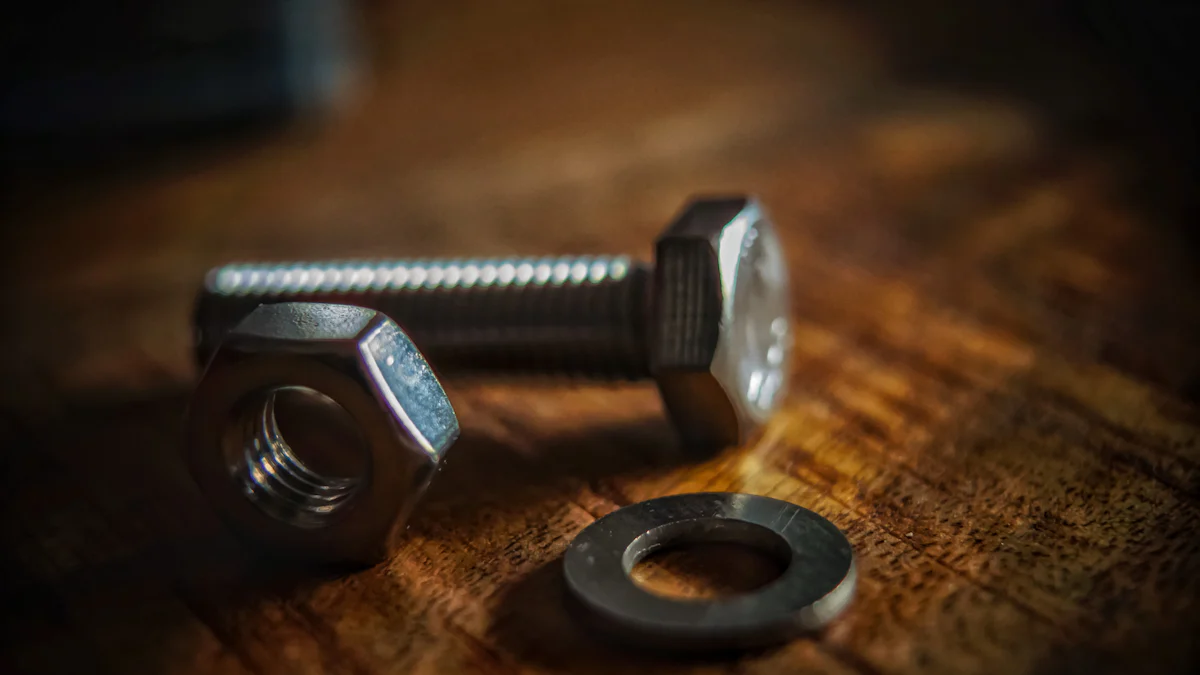
You should always inspect the markings on hex bolts to confirm their authenticity. Genuine bolts typically display clear and precise markings that indicate their grade, size, and standard compliance. These markings help you verify that the bolt meets the required specifications. Look for certifications from recognized organizations, as these ensure the bolt has undergone rigorous testing. Certifications provide assurance about the bolt's quality and performance. By checking these details, you can avoid counterfeit or substandard products.
Inspecting for defects or irregularities
Carefully examine each bolt for visible defects or irregularities. Scratches, cracks, or uneven threading can compromise the bolt's strength and reliability. Run your fingers along the threads to detect any inconsistencies. A high-quality bolt will have smooth and uniform threading. Check the bolt head for proper shaping and alignment. Defective bolts may fail under stress, leading to potential safety hazards. Taking the time to inspect bolts ensures you select components that meet your project's demands.
Ensuring Compliance with Standards
Working with reputable suppliers
Partnering with reputable suppliers is essential for obtaining genuine hex bolts. Reliable suppliers prioritize quality and adhere to industry standards. They provide detailed product information, including material composition and compliance certifications. Ask questions about the sourcing and manufacturing processes to ensure transparency. Reputable suppliers also offer customer support, helping you make informed decisions. Building a relationship with trusted suppliers guarantees consistent access to high-quality bolts for your projects.
Understanding relevant industry regulations
Familiarize yourself with the industry regulations governing hex bolts. These regulations outline the standards for dimensions, materials, and performance. Understanding these rules helps you identify compliant products. Research the specific requirements for your project to ensure compatibility. Non-compliance can lead to structural failures or legal issues. Staying informed about regulations empowers you to choose bolts that meet both safety and legal standards.
Selecting the right hex bolts ensures your project's success. By focusing on size, material, and specific requirements, you make informed decisions that enhance safety and reliability. Properly chosen bolts improve structural integrity and prevent costly failures. Always prioritize quality and compliance with standards to achieve long-lasting results. Your attention to these factors guarantees a secure and efficient outcome for any application.
FAQ
What are the main differences between DIN931 and DIN933 hex bolts?
DIN931 hex bolts are partially threaded, while DIN933 hex bolts are fully threaded. The partial threading in DIN931 provides better shear strength, making them ideal for structural applications. DIN933 bolts, with full threading, offer superior grip and tensile strength, which makes them suitable for projects requiring consistent tension.
How do I determine the correct size of a hex bolt for my project?
To choose the right size, measure the length, diameter, and thread pitch of the bolt. Ensure the bolt diameter is 1.5 to 2.5 times the thickness of the thinner material being fastened. This guideline helps distribute the load evenly and prevents material damage.
Which material should I choose for hex bolts?
The choice of material depends on your project’s requirements. Stainless steel works well in environments with moisture or corrosion risks. Carbon steel offers high strength for heavy-duty applications. Alloy steel provides a balance of strength and flexibility, making it suitable for diverse conditions.
Can I use DIN931 and DIN933 hex bolts interchangeably?
You can use them interchangeably only if the application allows it. DIN931 bolts work best in situations requiring shear strength and alignment. DIN933 bolts are better for applications needing full threading and higher tensile strength. Always evaluate the specific needs of your project before deciding.
How do I ensure the hex bolts I purchase are genuine?
Check for proper markings on the bolt, such as grade, size, and standard compliance. Look for certifications from recognized organizations. Inspect the bolts for defects like uneven threading or cracks. Purchasing from reputable suppliers ensures you get authentic and high-quality products.
What factors affect the durability of hex bolts?
Durability depends on material composition, environmental conditions, and proper installation. Stainless steel resists corrosion, while carbon steel performs well in controlled environments. Exposure to moisture, chemicals, or extreme temperatures can impact the bolt’s longevity. Always match the bolt material to the project environment.
Are DIN931 and DIN933 hex bolts suitable for outdoor use?
Yes, but the suitability depends on the material. Stainless steel bolts resist rust and corrosion, making them ideal for outdoor applications. Carbon steel or alloy steel bolts may require protective coatings to withstand outdoor conditions. Evaluate the environmental factors before selecting the material.
How do I choose hex bolts for high-load applications?
For high-load applications, consider the bolt’s strength and load-bearing capacity. DIN931 bolts provide excellent shear strength due to their unthreaded shank. DIN933 bolts offer superior tensile strength with their full threading. Select the bolt type that aligns with the specific load requirements of your project.
What industries commonly use DIN931 and DIN933 hex bolts?
These bolts are widely used in construction, automotive, and manufacturing industries. In construction, they secure structural frameworks and heavy machinery. In automotive applications, they fasten engine components and chassis parts. In manufacturing, they assemble machinery, tools, and production lines.
Why is compliance with DIN931 and DIN933 standards important?
Compliance ensures the bolts meet international specifications for dimensions, threading, and material quality. It guarantees compatibility with other components and enhances safety and reliability. Using compliant bolts reduces the risk of failure and ensures your project meets industry benchmarks.