

 Send Email
Research and application of bolt surface treatment technology
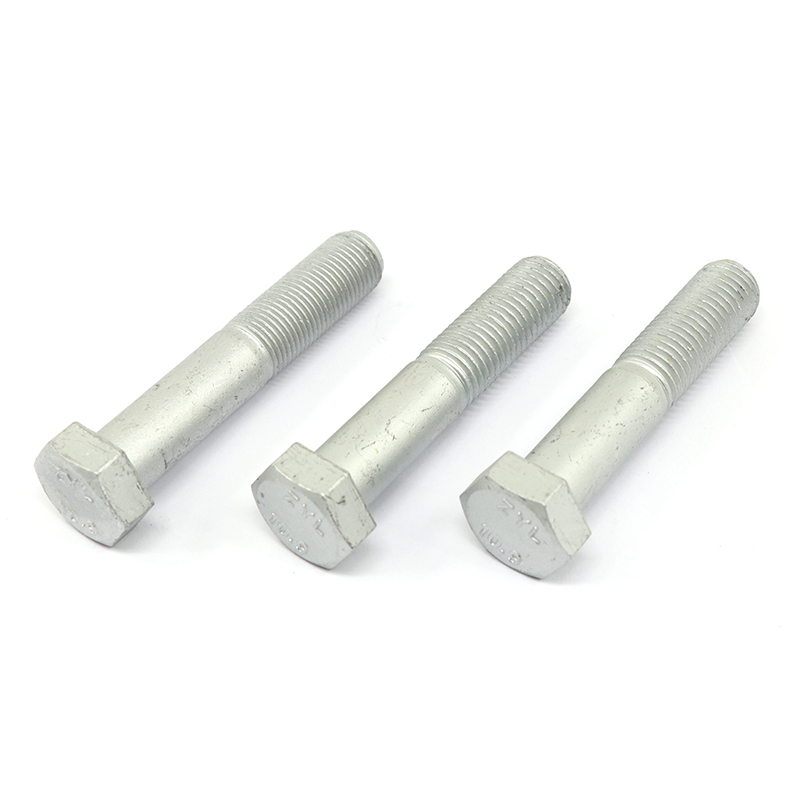
As an indispensable fastener in mechanical equipment, the performance of bolts directly affects the safety and stability of equipment. Surface treatment is an important means to improve bolt performance and prolong service life. In this paper, a variety of current bolt surface treatment technologies, including galvanizing, electroplating, spraying, heat treatment, etc. are reviewed, the principle, characteristics, application scenarios and limitations of each treatment method are analyzed, and the development trend of bolt surface treatment technology in the future is discussed.
As a widely used fastener in mechanical equipment, the quality, durability and bearing capacity of bolts are very important to the operation safety of equipment. However, bolts often face oxidation, rust, corrosion and other problems during use, which will not only reduce the performance of bolts, but also may adversely affect the stability of the entire mechanical system. Therefore, the surface treatment of bolts is particularly important. This paper aims to discuss the status quo, characteristics and application of bolt surface treatment technology, and provide reference for the research and application in related fields.
Summary of bolt surface treatment technology
1. Galvanized treatment
Galvanizing is a common bolt surface treatment method, by covering the surface of the bolt with a layer of zinc, forming a protective layer, effectively prevent the surface of the bolt oxidation and corrosion. Galvanizing treatment is divided into hot dip galvanizing and electric galvanizing. Hot dip galvanizing dips bolts into molten zinc solution to form a thicker zinc layer, suitable for outdoor environments and applications requiring high durability; Electrogalvanizing uses the principle of electrolysis to deposit a thin zinc layer on the surface of the bolt, which is suitable for indoor environment and occasions with low service life requirements. Galvanizing not only improves the corrosion resistance of bolts, but also increases their aesthetics. However, the coating may produce hydrogen embrittlement under certain conditions, which affects the strength and safety of the bolt. In addition, the galvanized process may produce waste water, waste gas and other pollutants, which need to be properly treated to meet environmental protection requirements.
2. Electroplating
Electroplating is one of the most widely used techniques in bolt surface treatment. By depositing a layer of metal coating on the surface of the bolt, such as chromium, nickel, etc., the corrosion resistance, hardness and aesthetics of the bolt can be enhanced. The bolts treated with chromium plating are very stable in the atmosphere, not easy to discolor and lose luster, and have high hardness and good wear resistance. Chromium plating is usually used to decorate and improve the corrosion resistance of bolts, but it is rarely used in industrial fields where the corrosion resistance is very high. Nickel plating treatment can enhance the corrosion resistance of bolts and improve their aesthetics.The nickel coating has good ductility and toughness, which is suitable for the occasions with high requirements on the bolt surface.
3. Spray treatment
Spray treatment is a process in which the paint is uniformly sprayed onto the bolt surface by the spray gun. Spraying can not only beautify the appearance of the bolt, but also enhance its corrosion resistance. Common spraying methods are sandblasting, spray painting, spraying polyimide and so on. Among them, spray painting treatment is widely used in electronic products and other industries because of its rich color and easy construction. The advantages of spraying treatment are simple construction, low cost, and you can choose different colors and materials according to your needs. However, the adhesion and durability of spray coatings may not be as good as electroplating and galvanizing treatments.
4. Heat treatment
Heat treatment is a technique by changing the hardness and strength of the bolt surface. Through heating, insulation and cooling processes, the structure of the bolt can be improved, and its wear resistance and tensile strength can be improved. Heat treatment is especially suitable for bearing large mechanical loads or extreme temperature changes, such as aerospace, military and other fields. However, the heat treatment process can lead to changes in bolt size, requiring strict control of process parameters to ensure quality.
5. Other processing techniques
In addition to the above common surface treatment technologies, there are a number of other technologies are also widely used in the field of bolt surface treatment. For example, the phosphating process is done by soaking the bolts in a high-temperature solution containing phosphoric acid and dihydrogen phosphate to form a crystalline phosphating film composed of phosphate precipitates. Phosphating film has good anti-corrosion properties, but it needs to be used with anti-rust oil to effectively extend the service life of bolts. In addition, new surface treatment technologies such as zincizing treatment and dacromet treatment have gradually received attention and application.
Application scenario and limitation analysis
The choice of bolt surface treatment technology depends on the specific use environment and performance requirements. For example, in Marine engineering, bolts need to be frequently exposed to seawater, and salt and moisture have a huge impact on the corrosion of bolts. The surface treatment of such bolts is often selected with a high galvanized or titanium alloy coating to provide stronger anti-corrosion protection. In high temperature industrial equipment, the requirements of bolt surface treatment pay more attention to high temperature resistance and thermal fatigue resistance, and heat treatment or titanium coating technology is used to improve the heat resistance of bolts.
However, each surface treatment technique has its limitations. For example, although the galvanized treatment is low cost and good anti-corrosion performance, it may produce hydrogen embrittlement phenomenon and environmental protection problems; Although electroplating treatment can improve the hardness and aesthetics of bolts, the cost is high and the coating may fall off under certain conditions. Spraying treatment is easy to construct, but adhesion and durability may be insufficient. Therefore, in practical applications, it is necessary to choose the appropriate surface treatment technology according to the specific situation by considering various factors.
Future development trend
With the continuous development of science and technology, bolt surface treatment technology is also constantly innovative and improved. In the future, we can foresee that the continuous emergence of new materials and new processes will promote the development of bolt surface treatment technology. For example, by covering the surface of a bolt with a nanoscale coating, the nanocoating technology can not only improve its corrosion resistance, but also enhance its antibacterial and antioxidant capabilities. In addition, environmentally friendly surface treatment technology will also become one of the future development trends to meet the increasingly stringent environmental requirements.
conclusion
Bolt surface treatment technology plays an important role in improving bolt performance and prolonging service life. In this paper, a variety of surface treatment techniques for bolts are reviewed, including galvanizing, electroplating, spraying, heat treatment, etc., and the principle, characteristics, application scenarios and limitations of each treatment method are analyzed. In the future, with the continuous emergence of new materials and new processes and the improvement of environmental protection requirements, bolt surface treatment technology will develop in the direction of more efficient, environmental protection and lasting.