

 Send Email
Grade Identification & Mechanical Properties of Hex Nuts (Unified National Coarse/Fine – UNC/UNF)

Grade Identification & Mechanical Properties of Hex Nuts (Unified National Coarse/Fine – UNC/UNF)
I. Identification Markings (Per SAE J995, ASTM A563, etc.)
Nuts are typically marked on one bearing face with symbols indicating grade, material, and manufacturer. The marking system is generally paired with the bolt grade they are intended to mate with.
1. Grade Markings:
· Grade 2 / Style 1 (Unmarked or "2"): Commercial grade for low-strength applications. Often unmarked.
· Grade 5 / Style 1 ("5"): Medium strength. Marked with "5".
· Grade 8 / Style 1 ("8"): High strength. Marked with "8".
· Grade A ("A"): Low carbon steel, general use (ASTM A563). Often unmarked or marked with manufacturer's symbol.
· Grade B ("B"): Medium strength, free-spinning (ASTM A563). Marked with "B".
· Grade C ("C"): Medium carbon steel, higher strength than B. Marked with "C".
· Grade D ("D"): Higher strength, similar to Grade 8. Marked with "D".
· Grade DH / Style 3 ("DH"): Heat-treated medium carbon steel, high strength. Marked with "DH" (commonly used with Grade 8 bolts).
· Grade G ("G"): Low carbon steel, similar to Grade A but with specific chemistry. Marked with "G".
· Grade H ("H"): Carbon or alloy steel, heat treated. No continuous line marking on the nut face indicates it is proof load tested (per ASTM A194 for heavy hex nuts).
2. Material & Special Use Marks:
· "H" and "HV" (ASTM A194): For high-pressure/temperature service. Marked with "H" (Carbon steel) or "HV" (Alloy steel).
· "L" or "L7": Designates nuts made from low-temperature carbon or alloy steel (e.g., ASTM A320 Grade L7).
· "2H": Denotes a nut conforming to dimensional standards and material chemistry but not necessarily proof load tested (common in ASTM A194).
· "F" (ASTM A194 Gr. 2H only): Indicates a nuts which have been electroplated (usually with zinc) with a supplementary lubricant coating.

II. Key Mechanical Properties
Properties are defined by proof load stress, hardness, and material.
1. Proof Load Stress: The maximum tensile stress the nut must withstand without permanent deformation when assembled with a hardened bolt/washer. It is the primary performance indicator.
· Example Values (ASTM A563, Hex Nuts):
· Grade A: Proof Load Stress = Not Required (for sizes 1/4" - 1-1/2").
· Grade C: Proof Load Stress = 85,000 psi (min, for sizes 1/4" - 1-1/2").
· Grade DH: Proof Load Stress = 120,000 psi (min, for sizes 1/4" - 1-1/2").
2. Hardness: Ensures the nut is strong enough to prevent thread stripping and distribute load.
· Example Values (SAE J995):
· Grade 5: Hardness = HRB 92 - HRC 30 (Rockwell scales vary by size).
· Grade 8: Hardness = HRC 24 - 36.
· Example Values (ASTM A563):
· Grade DH: Hardness = HRC 24 - 36.
3. Material & Heat Treatment:
· Low/Medium Carbon Steel (Grades 2, A, B, C): Typically not heat-treated, or quenched & tempered for higher grades.
· Medium Carbon/Alloy Steel (Grades 5, 8, D, DH, H, HV): Quenched and tempered to achieve specified strength and hardness.
· Corrosion-Resistant Steel: Grades like 304 (A2) and 316 (A4) are marked with the material grade (e.g., "A2-70") rather than a strength "grade" number. The number after the dash indicates the tensile strength in MPa/10 (e.g., 70 = 700 MPa min tensile strength).
III. Common Pairings with Bolt Grades
· Grade 2 / A Nuts: Used with SAE Grade 2 or ASTM A307 bolts.
· Grade 5 / B / C Nuts: Used with SAE Grade 5 or similar medium-strength bolts.
· Grade 8 / D / DH Nuts: Used with SAE Grade 8 or similar high-strength bolts.
· Grade H / HV Nuts: Used with ASTM A193 high-strength bolts in pressure vessel/piping applications.
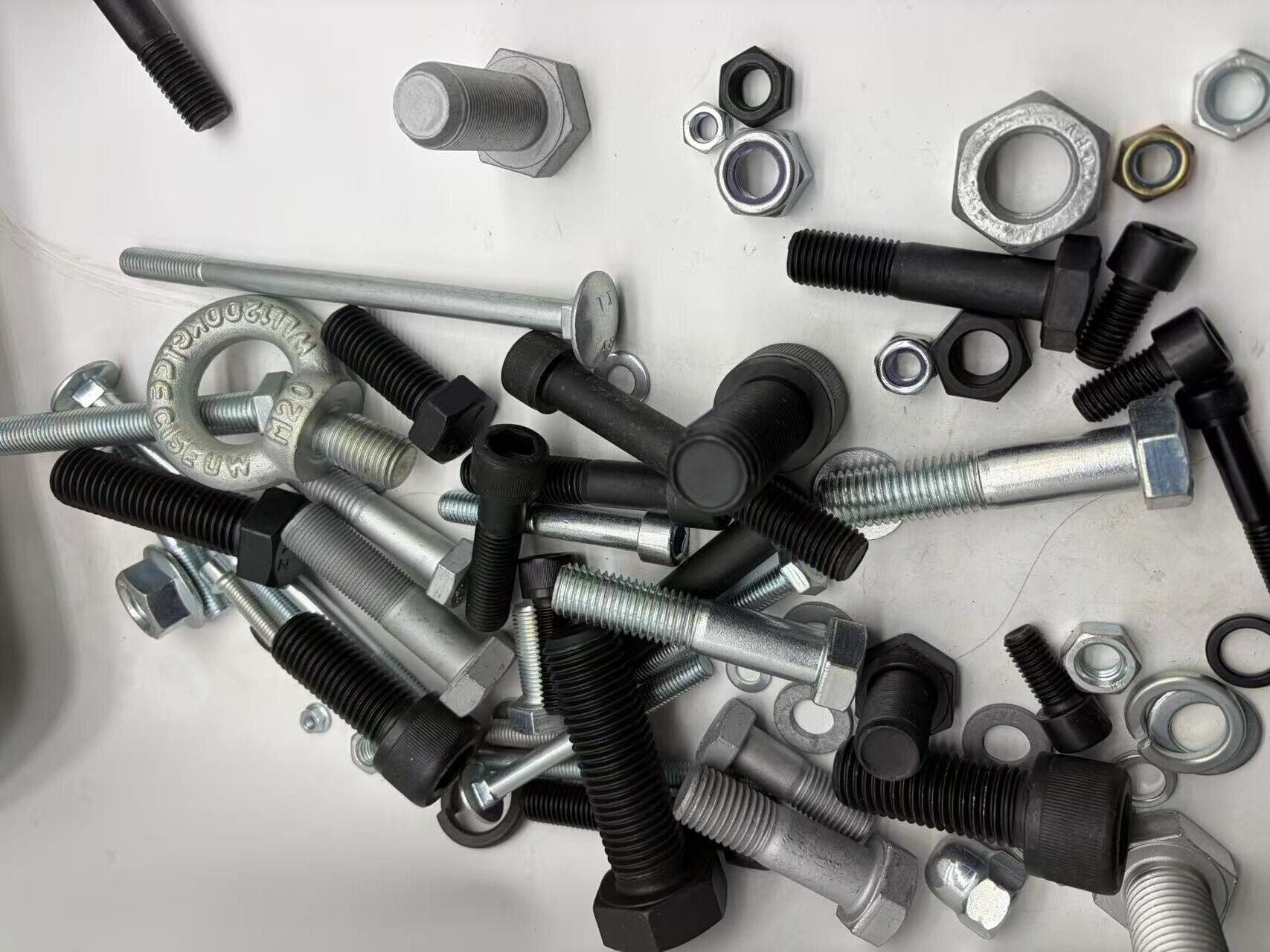
Important Note: Proper assembly requires matching the nut's strength grade (and proof load capacity) to that of the bolt to ensure failure (if it occurs) happens in the bolt thread, which is safer and more detectable. Always consult the latest official standards (SAE, ASTM) for complete specifications, test methods, and size-specific data.
If you have any question about our Bolt and nut, please feel free to contact my email tan@nbzyl.com