

 Send Email
How to Choose the Right Grade for Your Project?
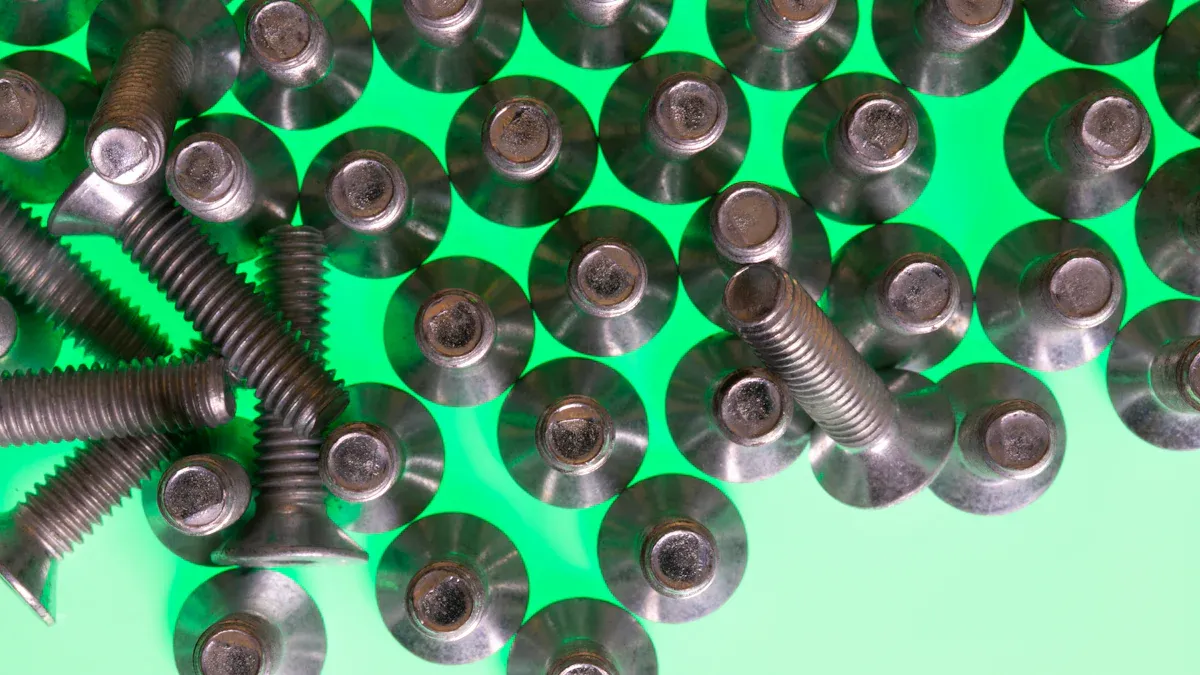
Selecting the correct hex bolt grade ensures project safety. An unsuitable grade can lead to critical failures. Project demands, such as load and environment, determine which bolt grade is best. These factors guide optimal Hex Bolts selection.
Key Takeaways
- Choose hex bolts based on project needs. Consider how much weight they must hold and the environment they will be in.
- Learn about different hex bolt grades and materials. Metric bolts use numbers, and imperial bolts use lines to show strength.
- Install hex bolts correctly. Use the right tools and follow instructions to make sure they work well and last long.
Assessing Project Demands for Hex Bolts
Understanding Load Types and Stress on Hex Bolts
Project success depends on understanding the forces a fastener must endure. Heavy-duty hex bolts feature high strength and high tensile strength. This makes them suitable for high-load scenarios. Their tensile strength often exceeds 1000MPa, and their yield strength is above 900MPa. This high capacity allows them to withstand significant external forces without fracture or plastic deformation. They are ideal for applications requiring high-strength connections, such as large machinery, highway bridges, and high-rise buildings. Tensile strength and yield strength are crucial mechanical properties for high-strength bolts, especially grades 8.8, 10.9, and 12.9. Engineers design these for high-load and strong-vibration conditions. Heat treatment, specifically 'quenching and tempering,' enhances these mechanical properties. This ensures the bolts meet design requirements and national standards. For instance, 10.9-grade bolts have a nominal tensile strength of at least 1000MPa and a yield strength of at least 900MPa. Tensile tests verify these values. Selecting the appropriate bolt type is critical for performance and safety. Using a standard hex bolt in high-stress situations can lead to joint failure or equipment damage. Heavy hex bolts are specifically engineered for demanding conditions. Their proper selection ensures structural integrity, safety, reliability, and longevity.
Evaluating Environmental Conditions for Hex Bolts
Harsh environmental conditions significantly degrade hex bolt integrity. These include extreme weather, high humidity, and corrosive elements. For instance, in outdoor or marine construction, choosing materials like stainless steel is crucial. Stainless steel offers exceptional corrosion resistance. This helps maintain structural integrity against environmental factors.
Environmental factors like groundwater chemistry are crucial in understanding corrosion mechanisms and assessing bolt service life.
Several factors contribute to degradation:
- pH Levels: Laboratory studies show pH levels significantly influence corrosion rates and degradation mechanisms in bolts.
- Corrosion: This is a critical failure mechanism, especially when combined with bending loads and tension-flexural stresses. It accelerates fracture propagation.
- Stress Corrosion Cracking (SCC): This is a significant degradation pathway for bolts in underground environments.
- Other Factors: Clay, coal, mine water, grout/cement environments, dissolved oxygen, and ion concentrations also drive corrosion.
Considering Material Compatibility for Hex Bolts
Choosing the right material prevents premature failure. In marine environments, specific materials offer superior corrosion resistance.
- Stainless steel type 316 is preferred over type 304 for marine applications. It has enhanced resistance against chlorides and salty conditions.
- Silicon bronze, a combination of copper and silicon, is highly effective against saltwater elements. It is often used in wooden boats for its non-magnetic and corrosion-resistant properties.
- Titanium is an excellent option for items like anchors and chain links. It requires exceptional strength and optimal corrosion resistance in marine environments.
Grade 316 stainless steel includes molybdenum in its alloy combination, alongside nickel and chromium. This offers superior corrosion resistance compared to Grade 304 stainless steel. Grade 304 lacks molybdenum, making it less suitable for highly corrosive environments like saltwater. Titanium Grade 5 heavy hex bolts are highly resistant to corrosion. Most marine environments do not affect them. They withstand seawater up to 500°F. Tests show they last nearly two decades in polluted seawater without pitting or crevice corrosion.
Galvanic corrosion occurs when two dissimilar metals come into contact in the presence of an electrolyte. Due to differing electrode potentials, an electrical current flows. This causes the more reactive metal to corrode at an accelerated rate. This process leads to degradation, crevice corrosion, and pitting. It ultimately compromises the fastener's performance. The rate of corrosion depends on the difference in reactivity between the metals, their surface areas, and the electrolyte level. For example, using carbon steel fasteners with an aluminum door in seawater causes the aluminum to corrode faster.
Galvanic corrosion risks with hex bolts arise when specific conditions are met:
- Direct contact between two dissimilar metals with different corrosion potentials.
- A conductive electrolyte solution, such as saltwater, regularly connects the two metals.
If any of these conditions are absent, galvanic corrosion will not occur. The relative surface areas of the metals in contact significantly affect the potential and amount of corrosion. For instance, using carbon steel or galvanized screws (anodic) to fasten a stainless steel post base (cathodic) leads to premature failure of the screws. This happens due to significant galvanic corrosion.
Decoding Hex Bolts Grades and Materials
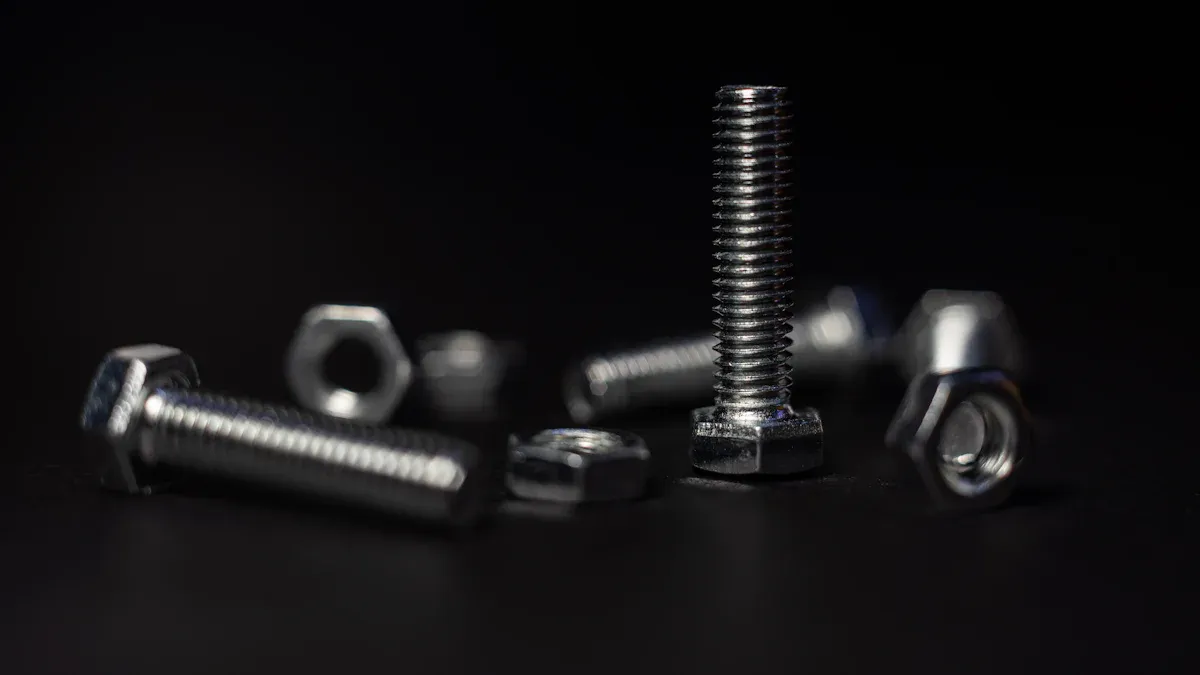
Understanding hex bolt grades and materials is crucial for selecting the right fastener. Each grade signifies specific mechanical properties. These properties determine a bolt's strength and suitability for various applications. Different materials also offer unique advantages, such as corrosion resistance or enhanced durability.
Common Metric Hex Bolts Grades and Strength Ratings
Metric hex bolts follow an international grading system. This system uses numbers to indicate tensile strength and yield strength. Higher numbers represent stronger bolts. For example, a bolt marked 8.8 has a nominal tensile strength of 800 MPa and a yield strength of 640 MPa.
Here is a comparison of common metric hex bolt classes:
| Class and Material | Nominal Size Range (mm) | Proof Load (MPa) | Min. Yield Strength (MPa) | Min. Tensile Strength (MPa) |
|---|---|---|---|---|
| Class 8.8 Medium carbon steel, quenched and tempered | All sizes below 16mm | 580 | 640 | 800 |
| Class 8.8 Medium carbon steel, quenched and tempered | 16mm - 72mm | 600 | 660 | 830 |
| Class 10.9 Alloy steel, quenched and tempered | 5mm - 100mm | 830 | 940 | 1040 |
| Class 12.9 Alloy steel, quenched and tempered | 1.6mm - 100mm | 970 | 1100 | 1220 |
| A-2 & A-4 Stainless Steel | All sizes thru 20mm | N/A | 210 Min. 450 Typical | 500 Min. 700 Typical |
Class 12.9 metric hex bolts are ultra high-strength fasteners. They are designed for high-stress applications. These bolts require maximum tensile performance. They are commonly used in heavy machinery, automotive, and structural assemblies. Their strength surpasses standard grades.
Grade 12.9 hex bolts are essential for applications demanding high tensile strength. These include:
- Bridges
- Construction sites
- Engineering applications
- Piping
Larger bolts typically find use in larger construction projects. Smaller ones appear in stronger equipment types. Metric hex bolt grade 12.9 also serves critical, high-load applications across various industries:
- Automotive & Aerospace: Engine components, suspension systems, and aircraft structural fasteners.
- Heavy Machinery & Construction: Excavators, cranes, bulldozers, bulldozers, and high-stress structural connections.
- Industrial Equipment: Hydraulic presses, machine tools, and robotic arms.
- Marine & Offshore: Shipbuilding (with corrosion-resistant coatings) and oil rig structures.
- Military & Defense: Armored vehicles and weapon systems.
Common Imperial Hex Bolts Grades and Strength Ratings
Imperial hex bolts use a different grading system. This system often relies on radial lines on the bolt head. These markings indicate the bolt's strength. For example, three radial lines typically denote a Grade 5 bolt. Six radial lines signify a Grade 8 bolt.
Here is a comparison of common imperial hex bolt grades:
| Head Marking | Grade and Material | Nominal Size Range (inches) | Proof Load (psi) | Min. Yield Strength (psi) | Min. Tensile Strength (psi) |
|---|---|---|---|---|---|
| No Markings | Grade 2 Low or medium carbon steel | 1/4" thru 3/4" | 55,000 | 57,000 | 74,000 |
| Grade 2 Low or medium carbon steel | Over 3/4" thru 1-1/2" | 33,000 | 36,000 | 60,000 | |
| 3 Radial Lines | Grade 5 Medium carbon steel, quenched and tempered | 1/4" thru 1" | 85,000 | 92,000 | 120,000 |
| Grade 5 Medium carbon steel, quenched and tempered | Over 1" thru 1-1/2" | 74,000 | 81,000 | 105,000 | |
| 6 Radial Lines | Grade 8 Medium carbon alloy steel, quenched and tempered | 1/4" thru 1-1/2" | 120,000 | 130,000 | 150,000 |
| Stainless Markings Vary | 18-8 & 316 Stainless Steel | All sizes thru 1" | N/A | 20,000 Min. 65,000 Typical | 65,000 Min. 100,000 – 150,000 Typical |
Understanding key terms helps interpret these tables. Tensile strength refers to the maximum load a material can withstand in tension before breaking. Yield strength measures the maximum load a material can handle before it permanently deforms. Proof load is an axial tensile load. The product must withstand this load without showing any permanent set.
Material Choices for Hex Bolts
The material of a hex bolt significantly impacts its performance. Different materials offer distinct advantages and disadvantages.
Stainless Steel
Stainless steel is a popular choice for many applications. It offers several benefits:
- Corrosion Resistance: Stainless steel effectively resists rust and corrosion. This makes it suitable for hydraulic and moist environments. It forms a protective oxide layer, ideal for marine settings or chemical plants.
- Durability and Long Lifespan: Stainless steel bolts last long, even in challenging conditions. This reduces the need for frequent replacements and maintenance.
- Strength in Various Environmental Conditions: Stainless steel maintains strength across high temperatures, humidity, or harsh chemicals. This makes it versatile for industrial and outdoor use.
- Aesthetic Appeal: Stainless steel provides a shiny, silver appearance. It is suitable for applications where aesthetics are important without needing additional coatings.
- Hygienic: Industries like food processing and pharmaceuticals prefer stainless steel. It is easy to clean and maintain sanitary conditions.
- Recyclability and Eco-Friendly Nature: Stainless steel is 100% recyclable. It allows reuse without quality loss, benefiting environmentally conscious projects.
However, stainless steel also has limitations:
- Cost: Stainless steel bolts are generally more expensive than carbon or regular steel bolts. This is due to the alloying process and corrosion-resistant properties.
- Lack of Strength and Hardness: Stainless steel is not as hard or strong as other fastener materials. It is better for low-stress applications rather than those requiring boosted durability. It may not match the tensile strength of carbon steel for extreme load-bearing uses.
- Potential Galling During Installation: Stainless steel is prone to thread damage (galling) if overtightened. This complicates installation or removal, especially in high-pressure applications.
- Galvanic Corrosion: This can occur when stainless steel contacts certain other metals. Proper insulation and material selection can mitigate this risk.
Alloy Steel
Alloy steel hex bolts are preferred for their high strength, durability, and enhanced resistance to corrosion and mechanical stress. They are suitable for demanding applications. Manufacturers often heat-treat them to improve mechanical properties. They can withstand higher loads and harsher conditions than standard steel bolts. Their versatility and reliability make them a top choice for critical structural and mechanical assemblies across various industries.
Alloy steel is the preferred material for hex bolts when:
- High Load Requirements are present. This necessitates a match between the bolt grade and the expected load.
- Vibration and Fatigue are concerns. Higher-grade bolts (e.g., 10.9 or 12.9) are better suited for dynamic loads or environments with constant vibration.
- Demanding Environmental Conditions exist. This requires appropriate coatings or stainless steel options in corrosive environments.
- Critical Applications where failure is not an option. These include aerospace, mining, and high-performance engines, due to their impressive load-bearing capability.
Here are some common alloy steel grades and their uses:
| Grade | Material & Strength Characteristics | Best Uses |
|---|---|---|
| 10.9 | Alloy steel, heat-treated for hardness and toughness; Tensile strength: ~1000 MPa; Yield strength: ~900 MPa | Automotive engines and suspensions, high-stress mechanical joints, railway applications, lifting and hoisting equipment, heavy-duty truck and trailer components |
| 12.9 | High-grade alloy steel, tempered and quenched; Tensile strength: ~1200 MPa; Yield strength: ~1080 MPa | Critical aerospace and defense applications, high-performance engines (motorsports, aviation), industrial robotics and automation, mining and tunneling equipment, hydraulic presses and power tools |
Practical Selection and Installation of Hex Bolts
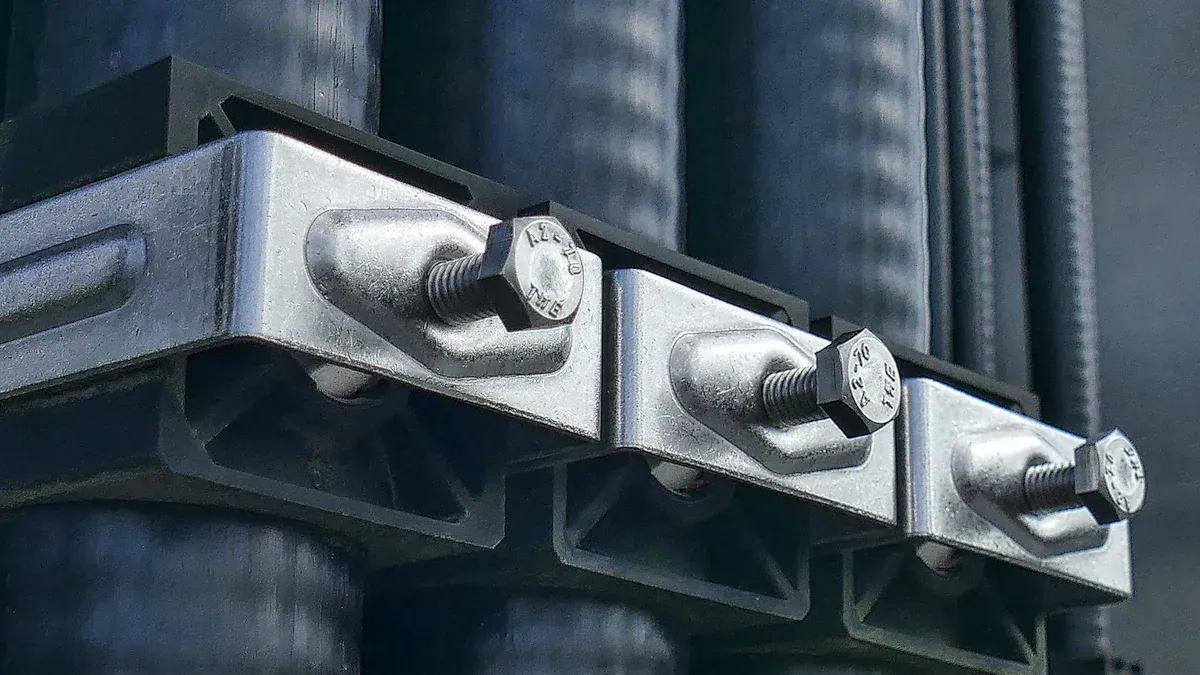
Matching Hex Bolts to Project Specifications
Selecting the correct hex bolt for a project requires careful consideration of its intended application. Engineers must match the bolt's properties to the specific demands it will face. One crucial aspect involves understanding shear loads. The Industrial Fastener Institute states shear strength is approximately 60% of the minimum tensile strength. For example, an SAE grade 5 hex cap screw has a specified minimum tensile strength of 120,000 psi. One can assume a shear strength of 70,000 psi for design purposes. This calculation helps ensure the bolt withstands forces trying to cut it across its axis.
When calculating shear value, engineers use the nominal diameter for applications where shear occurs in the unthreaded portion. If the shear area is in the threaded section, they use the minor diameter. Project managers should also exercise caution with certain fasteners. Some imported fasteners, such as lag screws, are typically ungraded. This makes it impossible to determine their strength characteristics without laboratory testing. Always verify the grade and strength of fasteners used in critical applications.
Sizing and Thread Type for Hex Bolts
The physical dimensions of a hex bolt significantly influence its ability to bear loads. The bolt's diameter directly affects its load-bearing capacity. Larger bolts typically handle more weight. A larger diameter generally means a higher maximum load capacity. This is because a greater cross-sectional area enhances the bolt's ability to resist applied forces. Therefore, choosing the right diameter is paramount for structural integrity.
Thread type also plays a role. Coarse threads offer quicker assembly and are less prone to galling. Fine threads provide a stronger connection and better resistance to vibration. Project specifications dictate the appropriate thread type for optimal performance.
Proper Installation Techniques for Hex Bolts
Correct installation techniques are as vital as selecting the right bolt. Improper installation can compromise even the strongest fastener. Applying the correct torque is essential. Torque specifications ensure the bolt achieves the necessary clamping force without overstressing the material. Over-tightening can strip threads or stretch the bolt beyond its elastic limit. Under-tightening can lead to loose connections and potential failure. For example, a 1/2 inch Grade 8 hex bolt has specific torque requirements:
| Condition | Torque (ft lbs) |
|---|---|
| Plain | 107 |
| Lubricated | 53 |
These values ensure optimal performance and safety. Always use calibrated torque wrenches. Follow manufacturer guidelines for specific applications. Proper installation guarantees the hex bolt performs as designed, ensuring the longevity and safety of the entire assembly.
Choosing the right hex bolt grade involves several essential steps.
- Assess project demands, including load types and environmental conditions.
- Understand specific bolt grades and material properties.
- Ensure proper installation techniques. Informed fastener decisions guarantee project safety and longevity. Always select the appropriate hex bolts for lasting success.
FAQ
What is the difference between metric and imperial hex bolt grades?
Metric grades use numbers like 8.8 or 10.9. These numbers show tensile and yield strength in MPa. Imperial grades use radial lines on the bolt head. These lines indicate strength levels like Grade 5 or Grade 8. 📏
Why is stainless steel not always the best choice for hex bolts?
Stainless steel costs more. It also lacks the extreme strength of alloy steel. It can gall during installation. It may cause galvanic corrosion with other metals. ⚠️
What does "tensile strength" mean for a hex bolt?
Tensile strength is the maximum pulling force a bolt can withstand. It measures before the bolt breaks. This property is crucial for safety in load-bearing applications. 💪
