

 Send Email

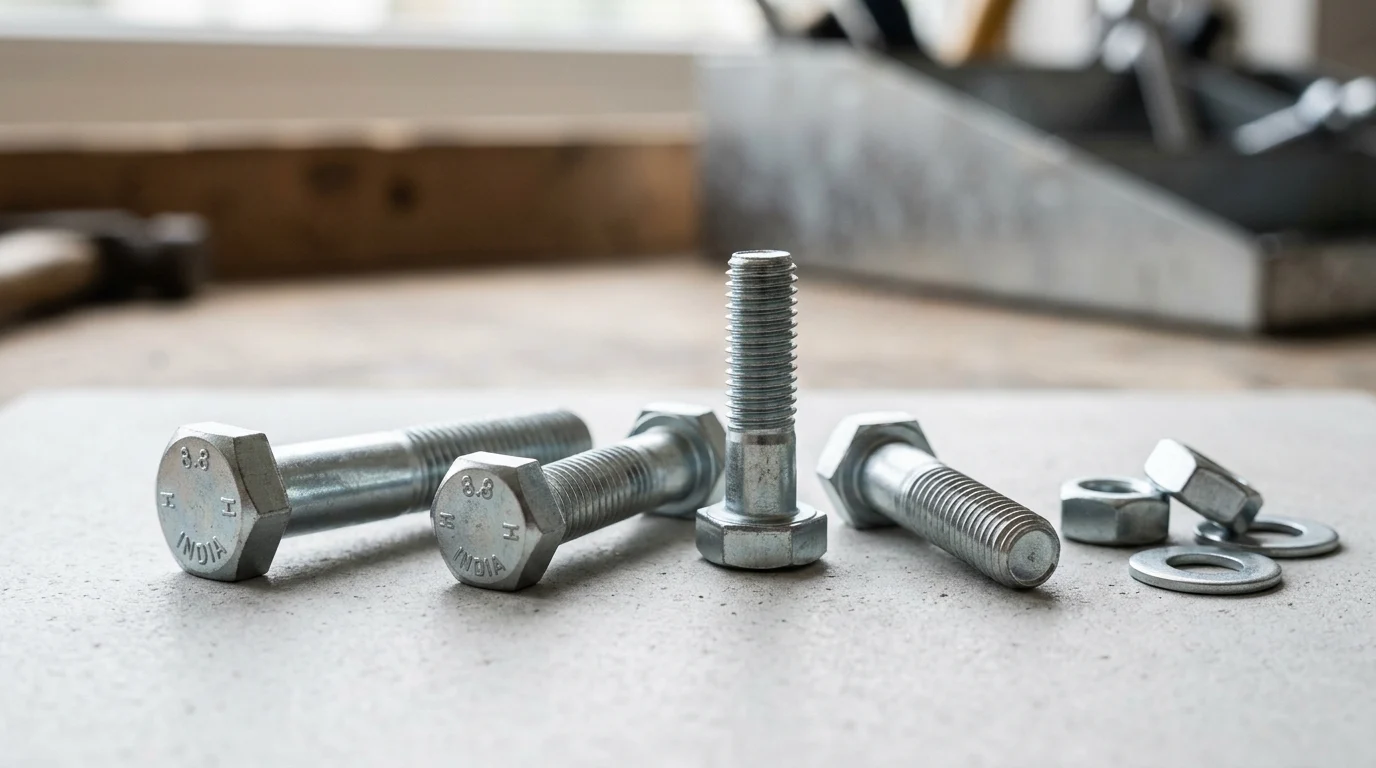
A hex bolt may look like a small line item, but in heavy equipment, construction, and industrial assemblies, it can determine whether a joint holds or a system shuts down. Alloy steel options often cost 1.8x to 2.5x more than standard carbon steel, which makes the purchase decision more than a simple price comparison. The real question is whether the added strength, heat treatment, and alloy chemistry reduce risk enough to justify the premium. This article examines the cost drivers, performance differences, and failure economics behind high-strength hex bolts so buyers and engineers can make a practical, application-specific decision.
Are Alloy Steel Hex Bolts Worth the Price
The decision to invest in alloy steel hex bolts often comes down to a rigorous cost-benefit analysis. While standard carbon steel fasteners are economical for light-duty applications, alloy steel variants command a premium due to their enhanced mechanical properties. Evaluating whether this price difference is justified requires procurement managers and engineers to look beyond the initial purchase order and assess the total cost of ownership over the project's lifespan.
Key cost factors to compare
The upfront price of alloy steel hex bolts is primarily driven by the raw materials—such as chromium, molybdenum, and vanadium—and the complex thermal treatments required to achieve high tensile strength. For instance, manufacturing SAE Grade 8 or metric Class 10.9 fasteners involves precise quenching and tempering processes that standard low-carbon bolts do not require.
When evaluating fastening products for an industrial project, buyers must weigh these initial manufacturing costs against lifecycle longevity. Alloy steel provides superior resistance to wear, fatigue, and deformation under extreme loads, which significantly reduces the frequency of maintenance and replacement cycles.
| Feature | Carbon Steel Hex Bolts (e.g., Grade 2) | Alloy Steel Hex Bolts (e.g., Grade 8) |
|---|---|---|
| Initial Cost | Low | High (approx. 2x to 3x higher) |
| Tensile Strength | ~74,000 PSI | ~150,000 PSI |
| Wear Resistance | Moderate | Excellent |
| Ideal Application | Non-critical joints, light assemblies | Heavy machinery, high-stress structural joints |
| Lifecycle Cost | High in high-stress environments | Low in high-stress environments |
When bolt failure becomes expensive
The true value of alloy steel hex bolts becomes apparent when calculating the potential costs of fastener failure. In critical sectors such as construction, aerospace, and heavy manufacturing, a sheared or deformed bolt does not simply mean replacing an inexpensive component. The secondary costs associated with structural failure are often astronomical.
Operational downtime is the most immediate financial penalty. If a standard carbon steel bolt shears in a commercial manufacturing press, the resulting production halt can cost thousands of dollars per hour in lost output. Furthermore, catastrophic joint failures introduce severe safety liabilities, regulatory fines, and the potential for extensive damage to surrounding capital equipment.
By specifying high-strength alloy steel hex bolts for load-bearing and high-vibration applications, project engineers effectively purchase an insurance policy against these exponential failure costs. In these high-stakes scenarios, the upfront premium paid for alloy steel is entirely justified by the operational stability and risk mitigation it provides.
What Defines Alloy Steel Hex Bolts
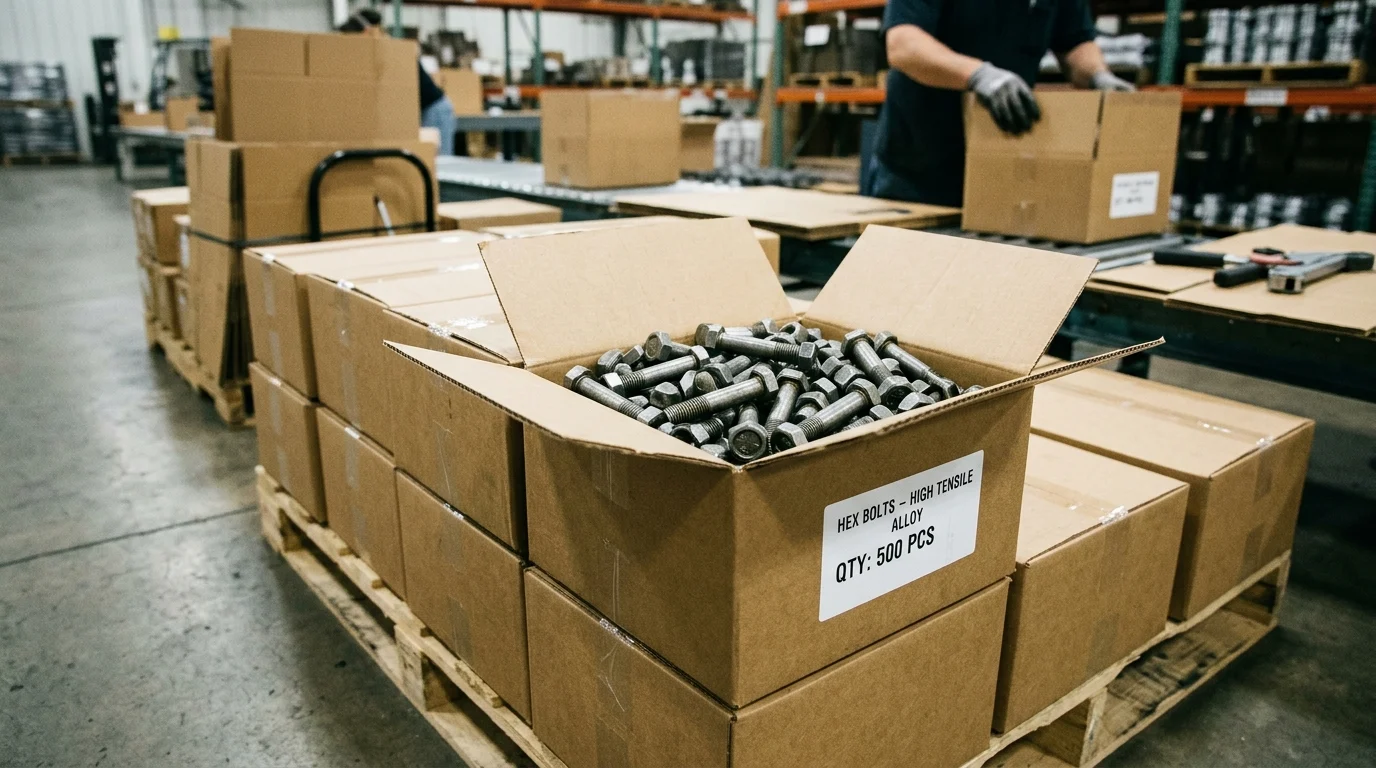
To justify the investment in high-performance fasteners, buyers and engineers must understand the metallurgical and dimensional characteristics that define them. Alloy steel hex bolts are engineered components designed to meet stringent international specifications for strength, ductility, and fatigue resistance. Their defining traits lie in their chemical composition and the precise thermal processing they undergo before reaching the assembly line.
Material and heat treatment
The defining characteristic of alloy steel is the intentional introduction of specific alloying elements into the iron-carbon matrix. Chromium is added to increase hardenability and wear resistance. Molybdenum enhances high-temperature strength and prevents temper embrittlement, while nickel improves overall toughness and impact resistance at low temperatures.
The true potential of this chemical composition is unlocked through advanced heat treatment. Alloy steel hex bolts are heated above their critical temperature, rapidly quenched to form a hard martensitic microstructure, and then tempered at precise temperatures. This process ensures the bolt achieves high tensile strength without becoming dangerously brittle. However, this increased strength comes with vital installation caveats: high-strength alloy bolts typically require hardened washers, controlled lubrication, and precise torque-to-yield or angle-controlled tightening to realize their rated performance and avoid brittle failure in the field.
Grade, standard, thread, and coating
Alloy steel hex bolts are categorized by strict grading systems that dictate their mechanical properties. In the United States, the Society of Automotive Engineers (SAE) J429 standard governs these fasteners, with Grade 8 being the most common alloy steel classification. Under the metric system, the International Organization for Standardization (ISO) 898-1 uses property classes, with Class 10.9 and Class 12.9 representing high-strength categories.
Thread precision is equally critical. High-strength hex bolts are typically manufactured to Class 2A thread tolerances, which serve as the standard commercial specification, while Class 3A is specialized and far less common for general industrial use. Because alloy steel is susceptible to oxidation, protective coatings are a standard requirement. Common surface treatments include zinc electroplating, zinc flake coatings, or PTFE for extreme chemical environments. Crucially, for electroplated high-strength bolts, immediate post-plating bake cycles are mandatory to prevent hydrogen embrittlement—a fatal flaw that can cause sudden, delayed failure under load. To mitigate this risk entirely, safer alternatives like zinc-flake or mechanically deposited coatings are highly recommended as the default.
| Specification Standard | Common Grade/Class | Minimum Tensile Strength | Minimum Yield Strength | Typical Core Hardness (HRC) |
|---|---|---|---|---|
| SAE J429 | Grade 8 | 150,000 psi | 130,000 psi | 33 - 39 |
| ISO 898-1 | Class 10.9 | 1040 MPa | 940 MPa | 32 - 39 |
| ISO 898-1 | Class 12.9 | 1220 MPa | 1100 MPa | 39 - 44 |
Alloy Steel vs. Carbon Steel Hex Bolts
Making an informed procurement decision requires a direct, technical comparison between standard carbon steel and alloy steel hex bolts. While carbon steel fasteners are perfectly adequate for static, low-stress applications, they quickly reach their mechanical limits in demanding industrial environments. The choice between the two materials dictates the safety factor, maintenance intervals, and overall reliability of the final assembly.
Performance criteria to compare
When engineers evaluate fasteners, they focus on four primary mechanical performance criteria: tensile strength (the maximum pulling force before breakage), yield strength (the point of permanent stretch and loss of clamp force), shear strength (resistance to perpendicular forces), and fatigue resistance (the ability to withstand repeated cyclical loading without cracking). While carbon steel provides moderate performance across these metrics, alloy steel is specifically engineered to maximize them, provided careful torque control is maintained during installation to avoid pushing the rigid bolt past its yield point.
Where alloy steel outperforms
Alloy steel decisively outperforms carbon steel in environments characterized by extreme stress and cyclical vibration. In heavy earthmoving equipment, mechanical joints are subjected to violent, unpredictable shock loads. A standard carbon steel bolt lacks the yield strength to maintain its clamp load under these conditions, leading to joint loosening and eventual failure. Alloy steel's high yield strength ensures the joint remains tight even under severe operational duress.
Temperature stability is another area of differentiation. Carbon steel begins to lose its mechanical integrity rapidly as temperatures exceed 200°C (392°F). Standard quenched-and-tempered alloy steel bolts (such as Grade 8 and Class 10.9) can operate reliably up to an approximate, application-dependent upper limit of 300°C (572°F). However, it is critical to note that sustained service near or above this range typically requires derating the fastener's load capacity. For extreme heat environments like petrochemical pipelines and power generation turbines, engineers must explicitly specify high-temperature creep-resistant grades, such as ASTM A193.
Strength, corrosion resistance, and durability
The quantitative differences in strength are substantial. A standard low-carbon steel hex bolt offers a minimum tensile strength of roughly 74,000 psi, and a medium-carbon steel bolt improves this to 120,000 psi. An alloy steel hex bolt delivers a minimum tensile strength of 150,000 psi or more. This allows engineers to either use fewer bolts in a joint design or specify smaller diameter bolts to save weight and space without sacrificing structural integrity.
Despite its superior strength, alloy steel does not inherently possess better corrosion resistance than carbon steel; both will rust rapidly if exposed to moisture and oxygen. The durability of an alloy steel bolt relies heavily on its protective coating. Because alloy steel is harder and stronger, it is more resistant to thread galling and physical abrasion during installation and maintenance, contributing to a longer functional lifespan in reusable joints.
| Material Type | Typical Grade | Tensile Strength | Temp Limit (Approx) | Illustrative Cost Premium | Ideal Application Profile |
|---|---|---|---|---|---|
| Low Carbon Steel | Grade 2 / Class 4.8 | 74,000 psi | ~200°C | Baseline (1x) | Light static loads, wood framing |
| Med Carbon Steel | Grade 5 / Class 8.8 | 120,000 psi | ~200°C | 1.2x - 1.5x | General automotive, light machinery |
| Alloy Steel | Grade 8 / Class 10.9 | 150,000 psi | ~300°C | 1.8x - 2.5x | Heavy equipment, structural joints |
| High-Strength Class | Class 12.9 | 177,000 psi | ~300°C | 3.0x+ | Extreme structural stress, aerospace |
What Buyers Should Check Before Sourcing
Procuring high-strength fasteners is a high-stakes endeavor. Counterfeit or sub-standard bolts can infiltrate the supply chain, presenting massive safety risks. A bolt stamped with a "Grade 8" or "10.9" head marking is only as reliable as the quality assurance system of the manufacturer behind it. Buyers must implement rigorous vendor qualification processes and demand specific documentation to ensure they are receiving genuine alloy steel components.
Standards, certifications, and traceability
The foundation of fastener procurement is strict adherence to international standards and verifiable traceability. Buyers should never accept high-strength alloy steel hex bolts without a corresponding Material Test Report (MTR). The gold standard for this documentation in global markets is the EN 10204 Type 3.1 certificate, which provides the actual chemical analysis and mechanical test results for the specific batch of fasteners being purchased.
Traceability must extend all the way back to the steel mill. The supplier must be able to track the finished hex bolt back to the original heat lot of steel. This ensures that if a defect is discovered in the field, the entire batch can be identified and quarantined. Without this level of traceability, a single failed bolt casts doubt on the integrity of the entire inventory.
Supplier quality and lot control
Evaluating supplier quality requires looking beyond the product catalog to the manufacturer's internal processes. A reputable supplier should hold current ISO 9001 certification and utilize statistical process control (SPC) on their threading and heading lines. High-quality fastener manufacturers target exceptionally low defect rates, often measured in parts per million (PPM).
Buyers should also audit the supplier's heat treatment capabilities. Improper heat treatment can result in decarburization (softening of the threads) or quench cracking. Sourcing fastener products requires vetting manufacturers that conduct in-house metallurgical testing—such as magnetic particle inspection for micro-cracks and micro-hardness testing—to effectively mitigate supply chain risk.
Specification steps to avoid overbuying
While under-specifying a bolt leads to failure, over-specifying leads to unnecessary budget bloat. Buyers should work closely with engineering teams to ensure the fastener matches the application's actual requirements. Specifying a Class 12.9 bolt for a joint that only experiences loads suitable for a Class 8.8 medium-carbon bolt can inflate fastener budgets significantly without delivering any tangible structural benefit.
To avoid overbuying, buyers should scrutinize the required safety factors and environmental conditions. If a joint requires high strength but is exposed to extreme marine corrosion, investing in a highly specialized coated alloy steel or moving to a duplex stainless steel might be necessary. However, if the environment is benign and the load is static, a lower-tier, less expensive fastener may be the optimal choice. Value engineering should focus on optimizing the clamp load-to-cost ratio.
When to Choose Alloy Steel Hex Bolts
The decision to utilize alloy steel hex bolts ultimately hinges on balancing upfront procurement costs against long-term operational reliability. While the premium price is undeniable, the total cost of ownership often heavily favors high-strength fasteners when deployed in the correct environments. Engineers and procurement officers must employ a systematic approach to identify where these premium components add genuine value and where standard alternatives suffice.
Applications that justify the premium
Certain industries and applications inherently justify the premium of alloy steel. In the heavy construction equipment sector, excavators and cranes rely on Grade 8 bolts to secure slewing rings and boom hinges, where dynamic shear forces are immense. In the automotive industry, alloy steel fasteners are non-negotiable for critical suspension components and cylinder head bolts, where maintaining exact clamp loads under high thermal and vibrational stress is vital for safety.
The petrochemical and oil and gas industries also rely heavily on alloy steel. Flange connections on pipelines operating at high pressures and handling hazardous fluids require fasteners that will not yield under pressure surges. In these applications, the regulatory and environmental costs of a pressure leak far outweigh the cost of premium alloy steel bolts.
Total cost of ownership calculation
A comprehensive Total Cost of Ownership (TCO) calculation is the most effective tool for justifying the purchase of alloy steel hex bolts. TCO goes beyond the invoice price to include the cost of installation, maintenance intervals, and the statistical probability of replacement.
Consider a hypothetical, quantitative worked illustration: a standard carbon steel bolt might carry a low initial cost of $1.00 but require $50 in maintenance labor for frequent re-torquing and periodic replacement due to fatigue over a five-year cycle. Conversely, a premium alloy steel bolt costing $2.50, when properly installed, maintains its clamp load reliably over its intended service life without requiring maintenance. Over that cycle, the standard bolt's hypothetical total cost escalates to $51, while the alloy bolt incurs zero additional labor, making it the vastly superior economic choice for dynamic joints.
Decision framework for engineers and buyers
To streamline procurement, organizations should adopt a structured decision framework. Step one involves identifying the maximum dynamic and static loads the joint will experience, and then applying an appropriate safety factor. If the calculated required yield strength exceeds the capabilities of medium-carbon steel, alloy steel becomes the default choice.
Step two requires assessing the operating environment. If the fastener will be subjected to high operating temperatures, or if it will experience millions of high-amplitude vibration cycles, the fatigue resistance and thermal stability of alloy steel are required. Finally, step three evaluates the criticality of the joint. If a fastener failure could result in human injury, catastrophic equipment damage, or severe environmental contamination, the cost premium of alloy steel is immediately justified as a necessary risk mitigation measure. By applying this framework, buyers ensure they are paying for performance only where it yields a tangible return on reliability.
Key Takeaways
- Compare alloy steel hex bolts by total cost of ownership, not unit price, because failure-related downtime can outweigh the initial 1.8x to 2.5x premium.
- Specify alloy steel hex bolts for high-stress, dynamic-load, vibrating, or safety-critical assemblies where standard carbon steel may exceed its performance limits.
- Factor raw material additives such as chromium, molybdenum, vanadium, and nickel into cost expectations because these commodities directly affect alloy steel pricing.
- Account for heat treatment quality when sourcing high-strength hex bolts, since controlled quenching and tempering are essential to reliable mechanical performance.
- Avoid downgrading fasteners in critical equipment because extracting broken bolts, re-tapping threads, and realigning machinery can cost far more than premium fasteners.
Frequently Asked Questions
Why do alloy steel hex bolts cost more than carbon steel bolts?
They cost more because alloy steel uses elements such as chromium, molybdenum, vanadium, and nickel, plus controlled quenching and tempering. These inputs raise raw material, energy, and manufacturing costs.
How much more expensive are alloy steel hex bolts?
A typical premium is about 1.8x to 2.5x over standard carbon steel hex bolts, depending on grade, market conditions, heat treatment requirements, and order volume.
When are alloy steel hex bolts worth the premium?
They are usually worth it in high-stress, high-load, vibrating, or safety-critical assemblies where bolt failure could cause downtime, equipment damage, or liability.
Can standard carbon steel hex bolts be used instead?
Yes, but only when the load, environment, and safety margin allow it. For critical machinery, structural loads, or dynamic stresses, alloy steel is often the safer long-term choice.
What is the biggest hidden cost of choosing cheaper bolts?
The biggest hidden cost is failure-related downtime. A broken bolt can require extraction, re-tapping, realignment, and lost production that far exceeds the original fastener savings.