

 Send Email
Introduction
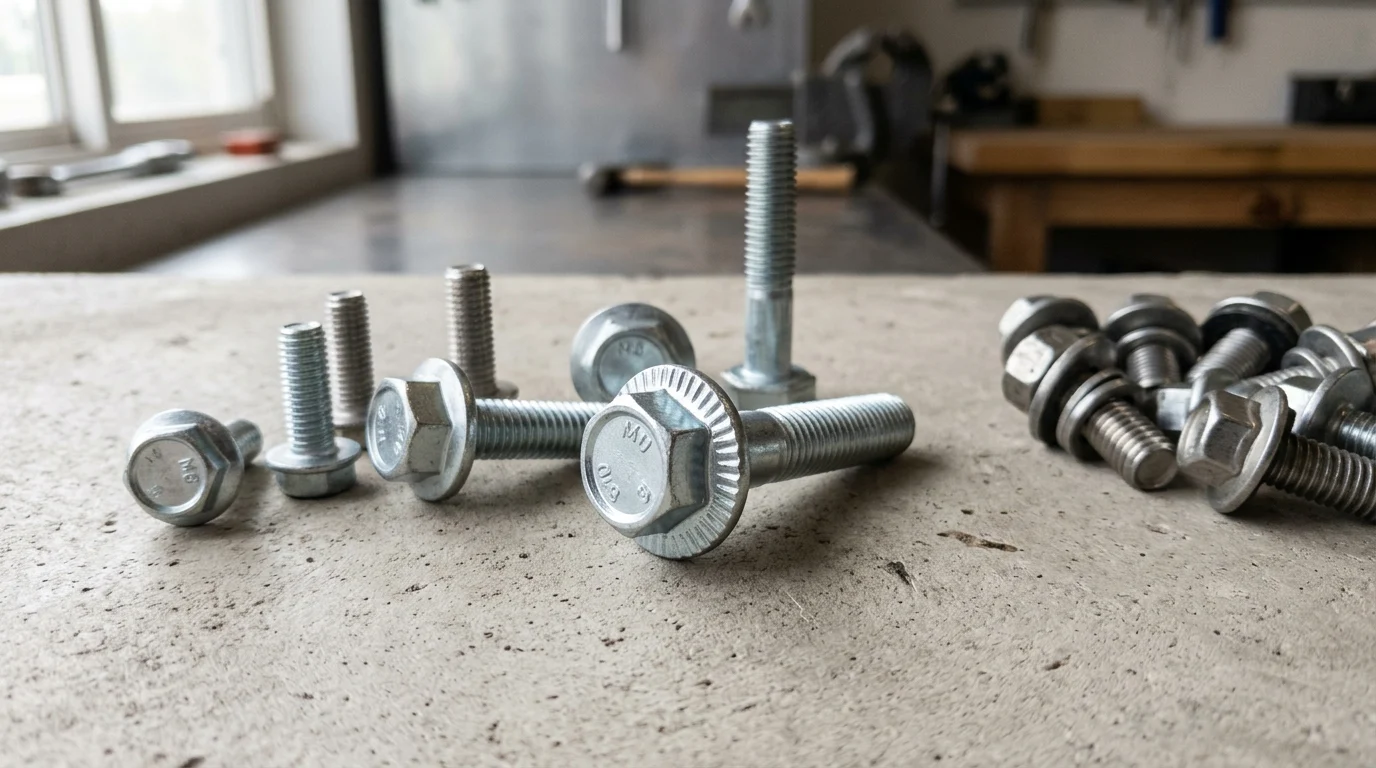
In structural engineering, fastener choice affects far more than assembly speed; it directly influences load transfer, joint reliability, and long-term performance. Hex flange bolts stand out because their built-in washer-like base spreads clamping force more evenly, reduces localized stress, and can simplify installation by removing a separate washer from the stack. These traits make them especially relevant in structures exposed to vibration, repeated loading, and thermal movement. This article explains the practical benefits of hex flange bolts, how their geometry improves connection behavior, and why engineers often specify them when joint stability and consistent preload matter most.
Why Hex Flange Bolts Matter in Structural Engineering
Hex flange bolts represent a critical evolution in structural fastener design, combining the traditional hex head with an integrated, washer-like base. In structural engineering, joint integrity relies heavily on the consistent application and maintenance of clamping force. By eliminating the need for a separate flat washer, hex flange bolts streamline the assembly process while enhancing the mechanical stability of the connection.
The integration of the flange directly alters how clamping forces are transferred from the fastener head into the joined materials. This shift in load dynamics makes these bolts highly valuable in applications where vibration, thermal cycling, and dynamic loading threaten joint stability. Understanding the mechanical advantages of this design requires a close examination of load distribution mechanics and the rigorous testing standards that dictate their use in load-bearing structures.
Impact on load distribution
The primary structural benefit of a hex flange bolt is its ability to distribute clamping load over a significantly wider surface area than a standard hex bolt. Because the flange is cold-forged as a single continuous piece with the bolt head, it provides a rigid, unyielding bearing surface. This geometry reduces localized bearing stress on the substrate by up to 25% to 30% compared to a standard bolt-and-washer combination.
When tightening a fastener to high preload values, excessive bearing stress can cause the underlying material to yield or embed, leading to a loss of tension over time. By expanding the contact area, hex flange bolts mitigate the risk of embedment, particularly when fastening softer materials like aluminum or thin-gauge steel components common in secondary structural framing.
Who evaluates their performance
The performance of structural fasteners is strictly regulated by international standard-setting bodies to ensure reliability under extreme loads. Organizations such as ISO publish comprehensive specifications, such as ISO 898-1, which dictates the mechanical properties of fasteners made from carbon steel and alloy steel.
Under these standards, hex flange bolts are subjected to rigorous testing, including wedge tensile tests, proof load tests, and hardness evaluations. Independent metallurgical laboratories and structural engineers rely on these standardized metrics to certify that a specific batch of fasteners will meet the required minimum yield strength—often critical when specifying Class 8.8 or 10.9 bolts for structural steel connections.
Key Features of Hex Flange Bolts
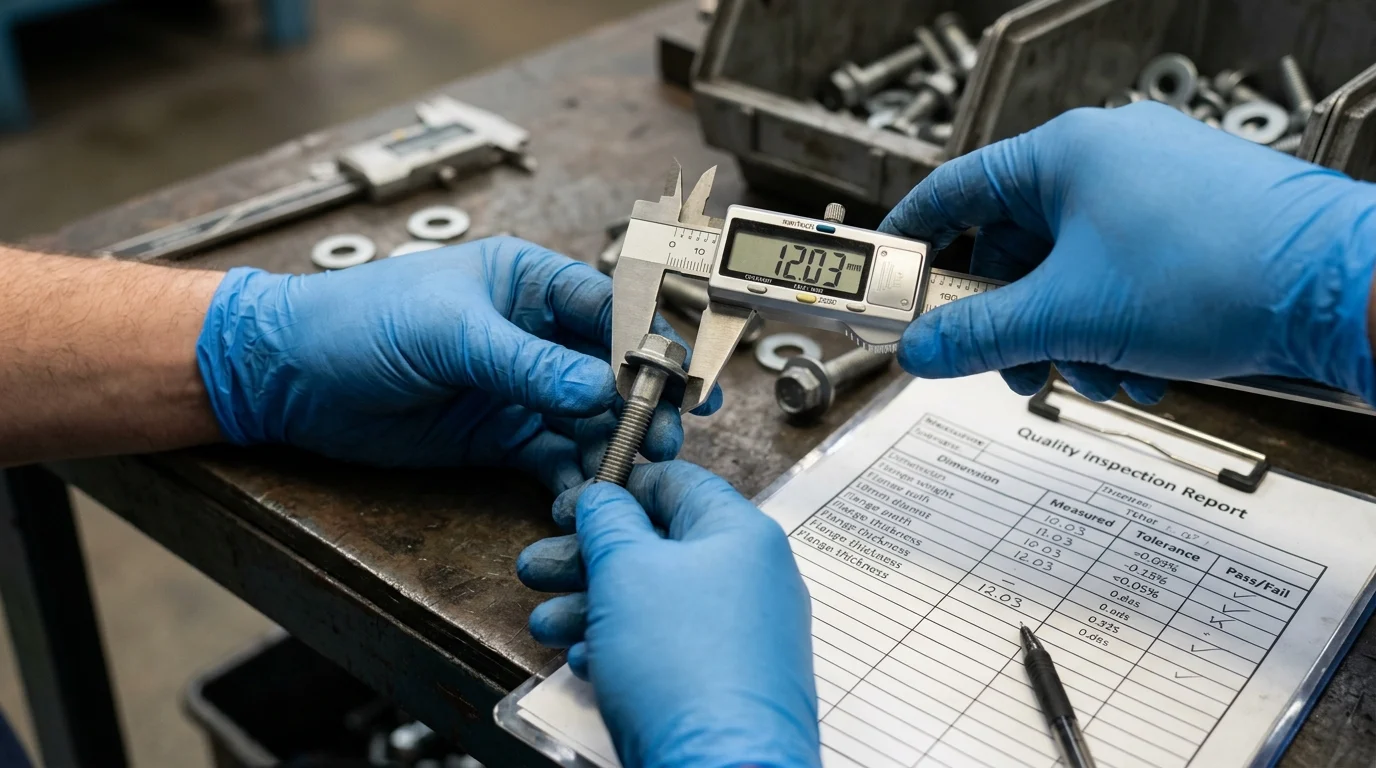
The utility of hex flange bolts in structural engineering is rooted in their unique manufacturing and dimensional specifications. Unlike standard hex bolts, which rely on auxiliary components to manage surface pressure, flange bolts are engineered to perform multiple functions through a single, optimized geometry.
Geometric and mechanical characteristics
Geometrically, the flange diameter is a defining characteristic, typically measuring between 2.1 and 2.5 times the nominal thread diameter of the bolt. This substantial footprint is paired with specific under-head angles and fillet radii designed to minimize stress concentrations at the junction of the head and the shank. Mechanically, these bolts are commonly manufactured to high-strength property classes. For example, a Class 10.9 hex flange bolt yields a minimum tensile strength of 1040 MPa and a nominal yield strength of 900 MPa, making it suitable for demanding structural loads.
| Feature | Standard Hex Bolt (M16) | Hex Flange Bolt (M16) |
|---|---|---|
| Head Width Across Flats | 24 mm | 21 mm (typically smaller) |
| Bearing Surface Diameter | ~22.5 mm (without washer) | 35 mm (flange outer diameter) |
| Bearing Area | ~397 mm² | ~962 mm² |
| Integral Washer | No | Yes |
How they differ from standard bolts
The most obvious deviation from standard bolts is the elimination of the separate washer. In standard assemblies, a washer can deform, rotate, or be installed incorrectly (e.g., upside down if chamfered), introducing variability into the joint's friction profile. The monolithic design of the hex flange bolt guarantees a consistent bearing surface, which stabilizes the torque-tension relationship during installation.
Furthermore, standard hex bolts require a larger wrenching profile to achieve the same clamping force, whereas hex flange bolts often feature a slightly smaller across-flats dimension. This allows for tighter clearance installations without sacrificing the bearing area, a crucial advantage when engineering compact structural nodes or automated assembly lines.
Hex Flange Bolts vs Conventional Structural Bolts
While hex flange bolts offer distinct advantages, they are not universally interchangeable with conventional heavy hex structural bolts (such as ASTM F3125 Grade A325 or A490). Structural engineers must evaluate the specific demands of the connection—whether it is a slip-critical joint or a bearing-type connection—to determine the appropriate fastener style.
Performance comparison criteria
Performance comparisons between hex flange bolts and conventional structural bolts hinge on clamping force generation, shear capacity, and joint embedment resistance. Conventional heavy hex bolts are explicitly designed for primary steel connections, featuring heavy heads and specific thread lengths that keep the shear plane out of the threaded portion. Hex flange bolts, conversely, excel in secondary framing, sheet metal connections, and dynamic assemblies where distributing bearing pressure is prioritized over massive shear capacity.
Preload retention and vibration resistance
Vibration resistance is an area where specific variations of hex flange bolts outperform conventional options. Hex flange bolts can be manufactured with serrated under-heads. These cold-formed serrations bite into the mating surface during the final stages of tightening. This mechanical locking action can increase the breakaway torque by approximately 15% to 20% compared to a non-serrated standard bolt and washer assembly.
This enhanced preload retention is particularly beneficial in environments subjected to continuous harmonic vibrations, such as rooftop HVAC structural supports, crane runway girders, and manufacturing facility frameworks, where standard bolts might otherwise back out over time.
Limitations in high-load applications
Despite their benefits, hex flange bolts face strict limitations in primary, high-load structural applications. Heavy hex structural bolts are available in massive diameters (frequently exceeding M36 or 1.5 inches) necessary for primary bridge girders and high-rise core columns. The cold-forging process required to create the wide, integral flange becomes economically and practically prohibitive at these massive scales.
Consequently, hex flange bolts are generally limited to maximum diameters of M20 or M24 in structural catalogues. For applications requiring extreme tensioning via direct tension indicators (DTIs) or massive hydraulic torque wrenches, the conventional heavy hex bolt remains the mandated standard.
Installation and Specification Considerations
Specifying hex flange bolts requires precise attention to material selection, environmental conditions, and installation protocols. Because the flange alters the friction profile under the bolt head, standard torque tables used for conventional bolts must be adjusted to ensure structural joints achieve their engineered preload.
Material grade and corrosion protection
Structural fasteners are highly susceptible to environmental degradation, making corrosion protection a vital specification criterion. Hex flange bolts are frequently treated with zinc plating or hot-dip galvanizing (HDG). HDG applies a robust zinc layer typically ranging from 40 to 85 microns in thickness, providing excellent long-term cathodic protection for outdoor structural steel.
However, engineers must account for hydrogen embrittlement risks when specifying high-strength flange bolts (Class 10.9 or Grade 8 and above). Improper electroplating processes can trap hydrogen within the steel matrix, leading to catastrophic delayed failures under structural loads. Consequently, mechanically deposited zinc or specialized zinc-flake coatings (like Dacromet or Geomet) are often specified for high-strength flange fasteners to entirely bypass the electroplating embrittlement risk.
Installation and inspection practices
Installation practices for hex flange bolts differ slightly due to the increased bearing area, which alters the nut factor (K-factor) used in torque-tension calculations. The wider flange increases under-head friction; therefore, achieving the same clamping force may require a different torque input compared to a standard bolt.
| Coating / Finish | Typical K-Factor (Hex Flange) | Application Environment |
|---|---|---|
| Plain / Uncoated (Light Oil) | 0.20 - 0.22 | Indoor, controlled humidity |
| Zinc Electroplated | 0.17 - 0.20 | Mild outdoor, secondary structures |
| Hot-Dip Galvanized | 0.25 - 0.28 | Heavy outdoor, corrosive environments |
| Zinc-Flake (e.g., Geomet) | 0.11 - 0.15 | High-strength, high-corrosion zones |
Inspectors must verify that the correct torque values are utilized based on the specific surface finish. While the turn-of-nut method remains highly reliable for structural steel, applications relying on calibrated torque wrenches must strictly adhere to the tested K-factor of the supplied batch.
Codes and compliance requirements
Compliance with international standards ensures lot traceability and reliable mechanical performance. Specifications such as ISO 4162 (for hex flange bolts with small series flanges) and ISO 1665 outline the exact dimensional tolerances and material requirements.
Structural engineers must ensure that procurement documents reference these exact codes. Furthermore, when these bolts are used in regions governed by strict building codes, comprehensive mill test reports (MTRs) must be maintained to verify the chemical composition and the results of proof load testing, ensuring the fasteners meet the ultimate tensile strength thresholds required by the structural design.
When to Specify Hex Flange Bolts
Determining when to specify hex flange bolts over alternative fastening methods requires a holistic view of the project. Engineers and procurement teams must weigh the mechanical benefits against supply chain realities, installation speed, and overall project economics.
Best-fit project scenarios
Hex flange bolts are the optimal choice in scenarios where rapid assembly and bearing surface protection are paramount. Pre-engineered metal buildings (PEMBs), solar panel racking systems, and automotive structural frames are prime examples. In these applications, the use of flange bolts eliminates the handling of separate washers. While saving 1 to 2 seconds per fastener may seem trivial, across a utility-scale solar installation requiring millions of connections, this translates to thousands of hours in reduced labor costs.
Additionally, they are highly recommended for joining oversized or slotted holes in secondary members, provided the flange diameter is sufficient to span the opening without risk of pulling through under load.
Sourcing and selection guidance
From a procurement standpoint, standardizing on hex flange bolts can streamline inventory management by reducing the number of individual SKUs (eliminating separate washer inventories). However, buyers must be aware of sourcing limitations for specialized sizes. While standard M8 through M16 sizes are globally abundant, specifying custom lengths or specialized zinc-flake coatings can trigger Minimum Order Quantities (MOQs) frequently exceeding 10,000 pieces.
Procurement teams should leverage global trade data to identify robust supply chains, ensuring that the selected manufacturing partners hold the necessary quality certifications. By aligning the structural requirements with realistic sourcing strategies, project managers can fully capitalize on the mechanical and economic benefits that hex flange bolts bring to modern engineering projects.
Key Takeaways
- The most important conclusions and rationale for Hex Flange Bolt Benefits
- Specs, compliance, and risk checks worth validating before you commit
- Practical next steps and caveats readers can apply immediately
Frequently Asked Questions
What is the main benefit of a hex flange bolt in structural engineering?
Its built-in flange spreads clamp load over a wider area, helping reduce bearing stress and maintain joint tension under vibration and dynamic loads.
Do hex flange bolts need a separate washer?
Usually no. The integrated flange acts like a washer, simplifying assembly and reducing the risk of missing or misinstalled washers.
Where are hex flange bolts especially useful?
They work well in structural steel, thin-gauge sections, aluminum parts, and compact joints where vibration resistance and wider load distribution are important.
How do hex flange bolts compare with standard hex bolts?
They provide a larger bearing surface and more consistent torque-to-tension behavior, while often fitting tighter spaces thanks to a smaller head profile.
Can I source hex flange bolts from CNZYL for structural applications?
Yes. CNZYL offers hex flange bolts and related fasteners, but always verify the required property class, dimensions, and standards for your project before ordering.