

 Send Email

Introduction
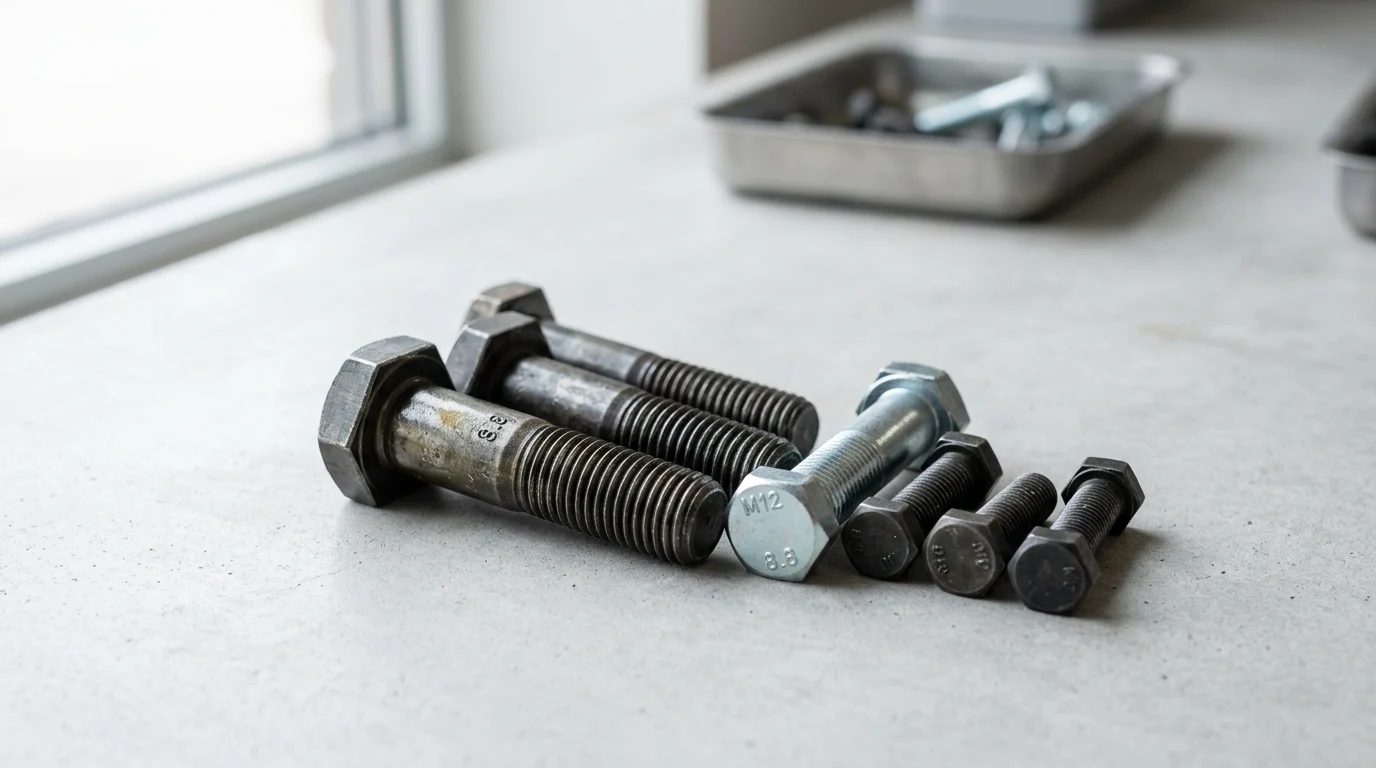
Heavy-duty hex bolts are more than simple fasteners: they are load-bearing components that help keep structural steel, machinery, and industrial equipment securely clamped under stress, vibration, and repeated use. For beginners, the challenge is knowing which features actually matter, from size and thread type to material strength and torque requirements. This guide explains the basics in practical terms, showing how hex bolts work, where they are used, and what to consider when selecting them for demanding applications. With that foundation, the rest of the article will make it easier to understand performance, safety, and long-term joint reliability.
Why Hex Bolts Matter in Heavy-Duty Applications
In industrial manufacturing, construction, and heavy machinery, the structural integrity of an assembly relies heavily on the quality and specifications of its fasteners. Among the most ubiquitous and critical of these components are heavy-duty hex-bolts. Characterized by their six-sided heads, these fasteners are engineered to deliver robust clamping forces, ensuring that massive steel frameworks, high-vibration machinery, and pressurized vessels remain secure under extreme operational stresses.
The fundamental mechanics of a bolted joint depend on the fastener acting as a stiff spring. When a heavy-duty hex bolt is properly torqued, it stretches elastically, compressing the joined materials together. This pre-tensioning creates a clamping force that must exceed the external loads applied to the joint, preventing separation and transverse slip. Understanding the precise role of these fasteners is the first step in engineering safe, durable, and compliant industrial systems.
Impact on joint integrity and maintenance
The primary function of any heavy-duty fastener is to maintain joint integrity over the intended lifecycle of the assembly. A properly specified and installed hex bolt prevents shear and tension failures by maintaining a consistent clamping force. In high-stakes applications, engineers typically specify torque values designed to achieve a preload equivalent to 70% to 80% of the fastener's minimum yield strength. If the preload falls below the operational load, the joint will separate, leading to rapid fatigue failure of the bolt due to cyclical stress.
Maintenance schedules are inextricably linked to joint integrity. Fasteners subjected to dynamic loads, thermal cycling, or intense vibration can experience self-loosening over time. Utilizing heavy-duty variants with appropriate thread locking mechanisms or tension indicators reduces the frequency of mandatory retorquing intervals. By maintaining strict preload tolerances, maintenance teams can extend the mean time between failures (MTBF) for critical infrastructure, directly reducing downtime and labor costs.
Industries that rely on heavy-duty hex bolts
Heavy-duty hex bolts are indispensable across a wide spectrum of demanding industries. In the structural steel construction sector, they are utilized to connect beams, columns, and girders, bearing immense static loads. The renewable energy sector relies on highly specialized fasteners for wind turbine assemblies, where tower flange bolts must withstand continuous aerodynamic stresses and up to 10,000,000 fatigue cycles over a standard 20-year operational lifespan.
Similarly, the mining and heavy earth-moving equipment industries require fasteners capable of enduring extreme shock loads and abrasive environments. In these applications, the bolts secure critical components such as bucket teeth, track shoes, and hydraulic cylinder mounts. The petrochemical and oil extraction industries also utilize heavy-duty hex bolts extensively in pipeline flanges and pressure vessels, where blowout prevention depends on the fasteners maintaining secure seals under internal pressures exceeding 10,000 psi.
Heavy-Duty Hex Bolt Types and Key Specifications
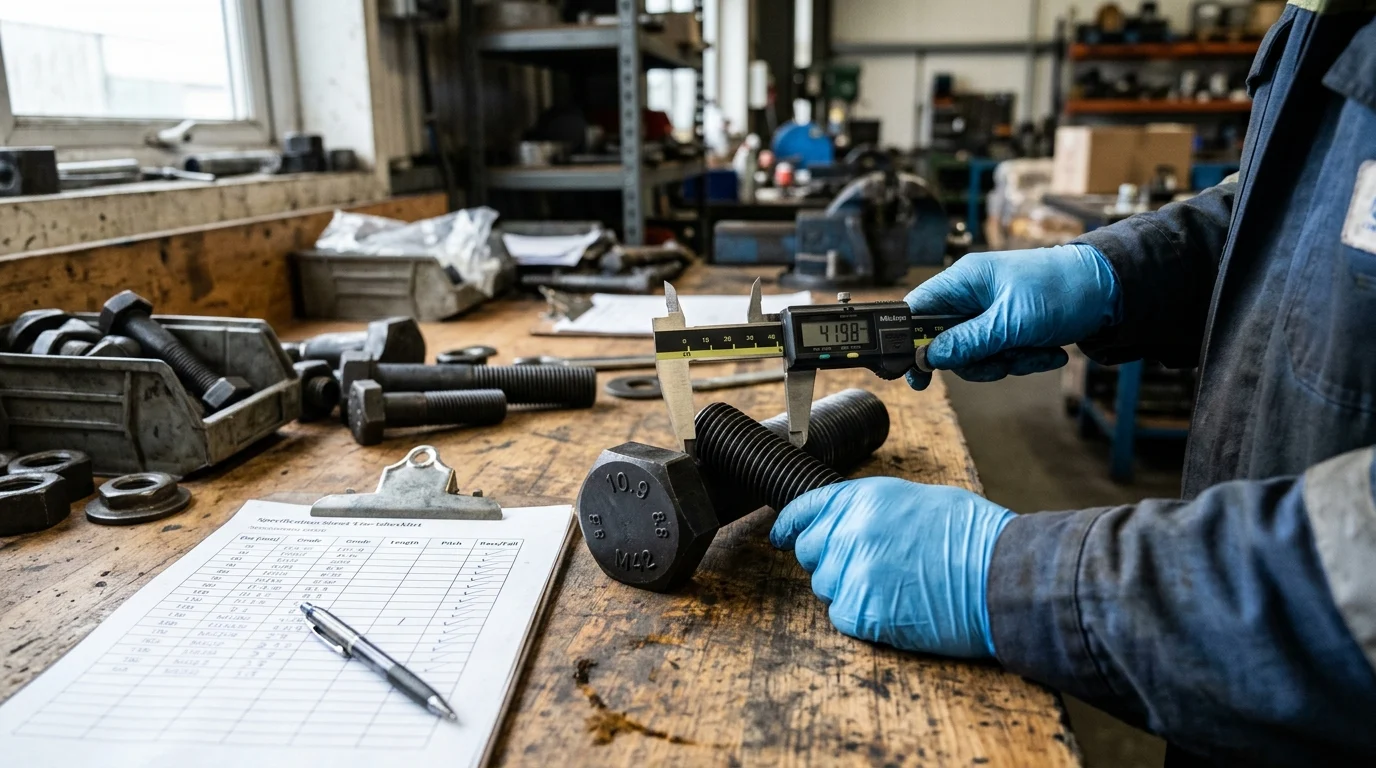
Specifying the correct fastener requires a comprehensive understanding of dimensional standards, thread configurations, and metallurgical properties. Heavy-duty hex bolts are not interchangeable commodities; they are highly engineered components categorized by strict international standards. Selecting the appropriate specification ensures that the fastener will perform reliably under the specific mechanical and environmental conditions of its intended application.
Dimensions, threads, and load classes
Dimensional specifications dictate the physical size and fit of the hex bolt. Fasteners are broadly divided into imperial and metric systems. Imperial bolts typically range from 1/4-inch to over 4 inches in diameter, while metric counterparts span from M6 to M100 and beyond for custom heavy-industrial applications. The length of the bolt must be carefully calculated to ensure adequate grip length—the unthreaded portion of the shank that sits within the shear plane of the joint.
Thread pitch is another critical variable, generally categorized into Coarse (UNC) and Fine (UNF) series. Coarse threads are preferred for heavy-duty applications involving cast iron, aluminum, or environments where debris might foul the threads, as they are less susceptible to cross-threading and galling. Fine threads offer a larger stress area and superior tension adjustment, making them suitable for high-vibration environments where precise torque control is necessary. Load classes determine the maximum stress the threads can bear before stripping, directly influencing the choice of matching nuts.
Material grades, coatings, and mechanical properties
The mechanical capabilities of a hex bolt are dictated by its material grade, which defines its tensile strength, yield strength, and proof load. In the SAE J429 standard, Grade 5 (medium carbon steel, quenched and tempered) offers a minimum tensile strength of 120,000 psi, while Grade 8 (medium carbon alloy steel) provides a superior 150,000 psi. In the metric system (ISO 898-1), Class 8.8 and Class 10.9 are common heavy-duty equivalents, with Class 12.9 offering ultra-high tensile strengths up to 1,220 MPa.
Coatings are applied to these base metals to mitigate environmental degradation. Zinc electroplating offers basic indoor protection, while Hot-Dip Galvanizing (HDG) deposits a thick zinc layer (typically 45 to 85 microns) suitable for harsh outdoor and marine environments. For extreme chemical resistance or low-friction requirements, specialized fluoropolymer coatings like PTFE are utilized. The choice of coating must account for the added thickness, which can affect thread tolerances and necessitate over-tapped nuts.
| Specification System | Grade / Class | Nominal Tensile Strength | Nominal Yield Strength | Typical Material |
|---|---|---|---|---|
| SAE J429 (Imperial) | Grade 5 | 120,000 psi | 92,000 psi | Medium Carbon Steel |
| SAE J429 (Imperial) | Grade 8 | 150,000 psi | 130,000 psi | Carbon Alloy Steel |
| ISO 898-1 (Metric) | Class 8.8 | 800 MPa | 640 MPa | Medium Carbon Steel |
| ISO 898-1 (Metric) | Class 10.9 | 1,000 MPa | 900 MPa | Carbon Alloy Steel |
| ISO 898-1 (Metric) | Class 12.9 | 1,200 MPa | 1,080 MPa | Alloy Steel (Quenched) |
Hex bolts vs structural bolts
While standard hex bolts and heavy hex structural bolts share a similar basic geometry, their design parameters are optimized for different types of joints. Standard hex bolts (such as those governed by ASME B18.2.1) are versatile fasteners used in general machinery, automotive, and OEM applications. They feature a standard head size and a thread length that varies proportionally with the overall length of the bolt.
In contrast, structural bolts (such as ASTM A325 and A490) are specifically engineered for steel-to-steel structural connections. They feature a "heavy hex" head, which is nominally 1/8-inch wider across the flats than a standard hex head. This larger bearing surface distributes the clamping load over a wider area, preventing indentation into the structural steel. Furthermore, structural bolts typically have shorter, standardized thread lengths to ensure the shear plane falls across the thicker, unthreaded shank rather than the weaker threaded portion.
How to Select Hex Bolts for Strength and Service Conditions
Selecting the optimal hex bolt requires translating theoretical engineering loads into practical hardware specifications. This process bridges the gap between mechanical design and real-world implementation, demanding a thorough analysis of the environment, mating components, and assembly procedures. A miscalculation in any of these areas can compromise the safety factor of the entire structure.
Application and environment factors
The service environment often dictates fastener selection as rigidly as the mechanical load. Temperature extremes severely impact metallurgical performance. For instance, standard carbon steel hex bolts begin to lose significant tensile strength when operational temperatures exceed 400°C (752°F). In cryogenic applications, standard carbon steel becomes brittle, necessitating the use of specialized austenitic stainless steels (like A2 or A4) or proprietary nickel alloys that maintain ductility at -150°C.
Corrosion resistance is equally vital. In coastal or offshore applications, engineers evaluate coatings based on salt spray testing standards (e.g., ASTM B117). A standard zinc-plated bolt may show red rust within 96 hours of salt spray exposure, whereas a heavily galvanized or zinc-nickel coated bolt can withstand 1,000 to 1,500 hours before failure. Additionally, the risk of galvanic corrosion must be assessed when bolting dissimilar metals; placing a highly anodic carbon steel bolt into a cathodic stainless steel structure in the presence of an electrolyte will result in rapid fastener degradation.
Thread engagement, nuts, and washer compatibility
A hex bolt cannot function in isolation; it operates as part of a system alongside nuts and washers. The most critical rule of fastener compatibility is that the nut must meet or exceed the strength grade of the bolt. Pairing an SAE Grade 8 bolt with a lower-grade nut will result in thread stripping before the bolt achieves its required preload. Furthermore, thread engagement depth is critical. For steel-to-steel connections, a thread engagement of 1.0 to 1.5 times the nominal diameter of the bolt is generally required to ensure the bolt will fracture in tension before the threads strip.
Washers play a vital role in this ecosystem by distributing the bearing load and preventing damage to the parent material during torquing. Hardened steel washers (such as ASTM F436) are mandatory when using high-strength hex bolts to ensure the washer does not deform under the massive clamping force. Washers also provide a consistent friction surface, which is essential for achieving accurate and repeatable torque-to-tension conversions during installation.
Step-by-step specification process
The specification process should follow a methodical, step-by-step approach to eliminate guesswork. Step one involves calculating the maximum external loads (tension, shear, and combined forces) the joint will experience. Engineers apply a safety factor—typically ranging from 2.0 to 3.0 for static loads, and up to 4.0 or higher for dynamic or shock-loaded applications—to determine the required minimum proof load of the fastener.
Once the load requirements are established, step two is selecting the material grade and diameter that satisfy those load criteria within the spatial constraints of the joint. Step three involves determining the appropriate coating or material alloy based on the environmental analysis. Finally, step four is specifying the precise length and thread pitch, ensuring the grip length is appropriate for the joint thickness and that the threads extend far enough to allow full nut engagement plus a minimum of two exposed threads.
Quality, Compliance, and Supply Chain Risk Review
Procuring heavy-duty hex bolts at an industrial scale introduces a complex matrix of quality assurance, regulatory compliance, and supply chain logistics. Because fastener failure can lead to catastrophic structural collapse or machinery breakdown, procurement professionals must rigorously vet their supply chains to mitigate the risk of counterfeit, substandard, or delayed components.
Standards, testing, and traceability documents
Industrial hex bolts must adhere to strict manufacturing standards set by organizations such as ASTM, ASME, SAE, and ISO. Compliance is verified through comprehensive testing protocols, including tensile testing, hardness testing, and dimensional inspections. For critical applications, buyers require Material Test Reports (MTRs), which provide a certified chemical analysis of the steel heat lot and document the physical properties achieved post-heat treatment.
Traceability is non-negotiable in heavy-duty applications. Each production lot must be identifiable from the steel mill to the final installation site. High-tier suppliers utilize ISO 9001-certified quality management systems and optical sorting technologies to minimize anomalies, often targeting defect rates below 50 Parts Per Million (PPM). In highly regulated sectors like aerospace or nuclear power, non-destructive testing (NDT), such as magnetic particle inspection, is employed to detect micro-cracks before the fasteners enter the supply chain.
Domestic vs imported hex bolts
The decision between sourcing domestic versus imported hex bolts hinges on balancing cost, lead time, and perceived quality risks. Domestic manufacturers typically offer shorter lead times, often ranging from 1 to 4 weeks for standard items, and provide robust, easily verifiable quality documentation. This responsiveness is crucial for rapid prototyping, emergency maintenance, or fulfilling contracts that require domestic material compliance (e.g., the Buy American Act).
Conversely, imported fasteners, particularly from high-volume manufacturing hubs in Asia, offer significant unit cost advantages. However, these savings are offset by extended logistical timelines, with ocean freight and customs clearance pushing lead times to 10 to 16 weeks. Buyers relying on imported fasteners must also implement more stringent incoming quality control measures to verify that the offshore factories are strictly adhering to the specified metallurgical and dimensional tolerances.
| Sourcing Factor | Domestic (U.S./EU) Supply | Offshore / Imported Supply |
|---|---|---|
| Typical Lead Time | 1 to 4 weeks | 10 to 16 weeks |
| Minimum Order Quantity (MOQ) | Low to Medium | High (Often container volume) |
| Unit Cost | Baseline / Premium | 20% to 40% reduction vs Baseline |
| Traceability Verification | Direct / Accessible | Requires strict third-party audits |
Cost and logistics factors
Cost analysis in fastener procurement extends far beyond the piece price. Heavy-duty hex bolts are dense, low-margin commodities, making them highly sensitive to fluctuating raw material indices (like global steel prices) and logistics costs. Freight charges, calculated by weight, can dramatically inflate the total landed cost of a shipment. Consequently, optimizing pallet density and container utilization is a priority for high-volume buyers.
Minimum Order Quantities (MOQs) also dictate purchasing strategies. While standard zinc-plated Grade 5 bolts might be available off-the-shelf in small box quantities, custom-length heavy hex bolts with specialized coatings (like PTFE or zinc-nickel) often require factory production runs with MOQs exceeding 10,000 pieces. Procurement teams must accurately forecast their consumption to avoid tying up excess capital in specialized inventory while ensuring they meet the MOQ thresholds required for custom manufacturing.
Building a Reliable Hex Bolt Purchasing Strategy
Establishing a reliable purchasing strategy for heavy-duty hex bolts requires integrating the technical specifications with robust vendor management practices. A reactive purchasing model—buying fasteners only when stock runs low—leaves industrial operations vulnerable to stockouts, price spikes, and project delays. Instead, organizations must adopt proactive, strategic procurement frameworks.
Supplier evaluation and stocking policies
Evaluating a fastener supplier goes beyond comparing quotes. Industrial buyers must assess a vendor's financial stability, quality control infrastructure, and technical support capabilities. A preferred supplier should act as a consultative partner, capable of reviewing joint designs and suggesting alternative fastener grades or coatings that could improve performance or reduce costs. Auditing the supplier's warehouse operations and requesting samples for independent metallurgical testing are standard practices before signing long-term supply agreements.
To mitigate the risks associated with long lead times, particularly for imported components, organizations frequently implement Vendor-Managed Inventory (VMI) or Just-In-Time (JIT) stocking policies. Under a VMI agreement, the supplier monitors the buyer's bin levels and replenishes stock automatically. For critical heavy-duty bolts where a stockout would halt a production line or construction site, procurement teams typically maintain a safety stock buffer of 15% to 20% above forecasted demand, insulating the operation against unexpected supply chain disruptions.
Final decision guidelines
The final decision in hex bolt procurement should be guided by the Total Cost of Ownership (TCO) rather than the initial acquisition cost. TCO factors in the purchase price, freight, inventory holding costs, and the statistical probability of fastener failure. Specifying a cheaper, lower-grade bolt might save pennies per unit but can result in thousands of dollars in warranty claims, maintenance labor, and reputational damage if the joint fails in the field.
Ultimately, building a reliable purchasing strategy requires cross-functional alignment. Engineering must clearly define the required standards, load classes, and environmental protections; quality assurance must establish the testing and documentation thresholds; and procurement must negotiate the logistics, MOQs, and inventory buffers. By treating heavy-duty hex bolts not as generic hardware, but as highly engineered structural components, organizations can optimize their supply chains, ensure regulatory compliance, and guarantee the long-term structural integrity of their industrial assets.
Key Takeaways
- The most important conclusions and rationale for Hex Bolts
- Specs, compliance, and risk checks worth validating before you commit
- Practical next steps and caveats readers can apply immediately
Frequently Asked Questions
What makes a hex bolt suitable for heavy-duty use?
A heavy-duty hex bolt combines the right diameter, grade, thread type, and preload to hold joints under high load, vibration, or pressure without loosening or failing.
Should I choose coarse or fine threads for hex bolts?
Use coarse threads for dirty, cast, or softer-material applications. Choose fine threads when you need better tension control and improved resistance in high-vibration assemblies.
How tight should a heavy-duty hex bolt be?
Follow the engineered torque spec for the bolt grade and joint design. Heavy-duty joints are often tightened to achieve about 70%–80% of the bolt’s minimum yield strength.
Which industries commonly use heavy-duty hex bolts?
They are widely used in structural steel, heavy machinery, mining equipment, wind turbines, pipelines, and pressure vessels where secure clamping is critical.
How can I reduce loosening and maintenance on hex bolt joints?
Use the correct preload, suitable locking methods, proper grip length, and regular inspection intervals, especially in joints exposed to vibration, thermal cycling, or shock loads.