

 Send Email


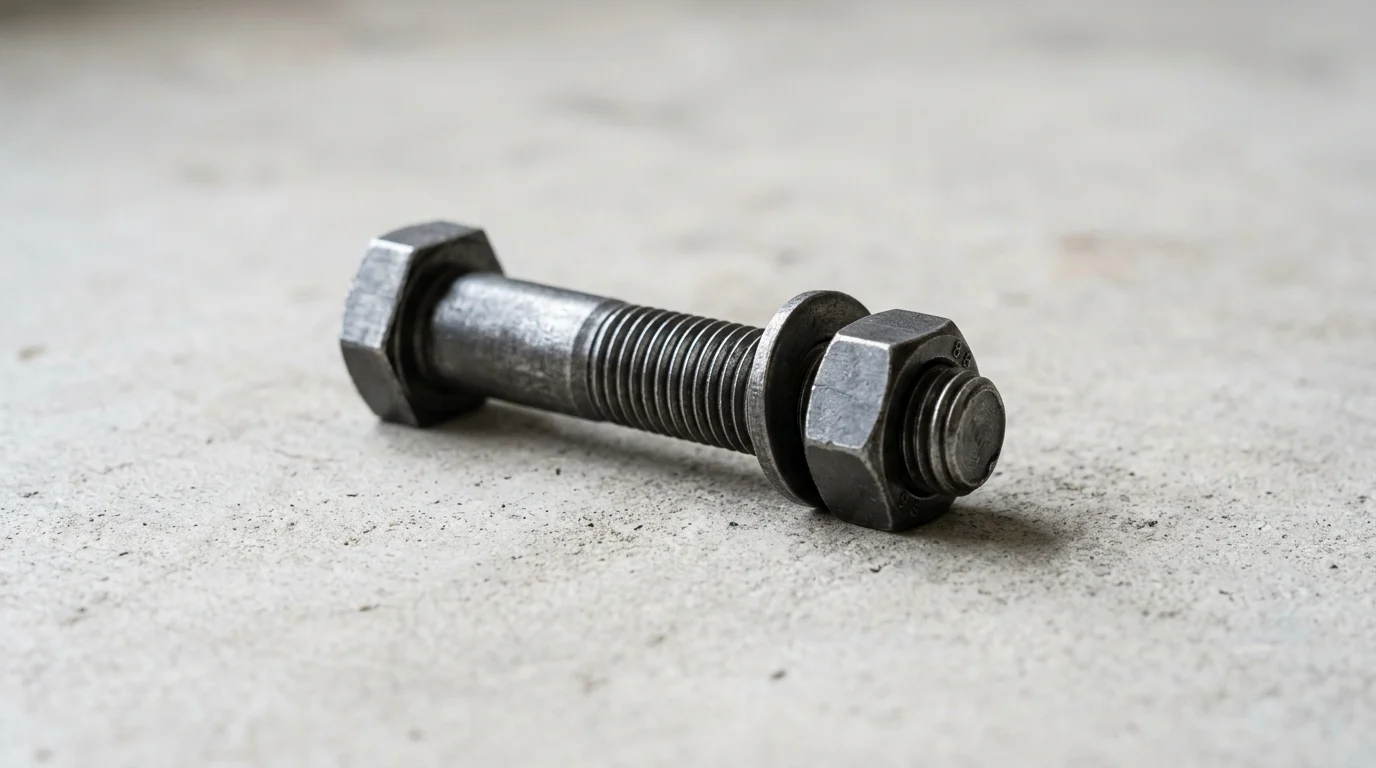
Bridge connections carry more risk than their size suggests: a single fastener choice can influence fatigue life, corrosion resistance, and load transfer across an entire span. For engineers and procurement teams, selecting the right hex bolt grade is not simply a strength comparison—it requires understanding ASTM structural bolt standards, pretension requirements, coating limits, and exposure conditions such as de-icing salts or coastal air. This guide explains how common bridge bolt grades like A325 and A490 differ, why generic hardware grades are usually inappropriate, and what factors help determine the best fastener assembly for long-term safety and performance.
Why Hex Bolt Grade Selection Matters for Bridges
In the realm of heavy civil engineering, the structural integrity of a bridge is intrinsically linked to the reliability of its connections. While massive steel girders and reinforced concrete piers dominate the visual landscape of infrastructure, the microscopic load transfers occurring at connection points dictate the lifespan of the entire structure. Selecting the correct grade for hex bolts and structural fasteners is not merely a matter of joining two steel plates; it is a complex engineering decision that balances tensile strength, ductility, environmental resilience, and long-term fatigue resistance.
Bridge failures or premature maintenance cycles are rarely caused by the sudden yielding of a primary girder. Instead, they frequently originate at the connections, where improper fastener selection, insufficient pretensioning, or unexpected corrosion initiates localized structural degradation. Engineers must evaluate how fastening assemblies will behave over a design life spanning 50 to 100 years, ensuring that every bolt can withstand the extreme demands placed upon modern transportation infrastructure.
Impact on Bridge Safety and Performance
The safety and performance of a bridge depend heavily on the continuous clamping force provided by structural bolt assemblies. Bridges are highly dynamic structures, subjected to constant cyclic loading from commercial truck traffic, commuter vehicles, and freight trains. A typical highway overpass may endure over 10 million significant stress cycles throughout its operational life. If a fastener lacks the appropriate grade or metallurgical properties, these continuous cycles can induce fatigue cracking, gradually compromising the joint.
Furthermore, proper grade selection prevents catastrophic shear and tensile failures. In a localized stress concentration, forces can easily exceed 50,000 psi. If a bolt yields under these conditions, the load immediately redistributes to adjacent fasteners, potentially triggering a progressive collapse sequence. The specified fastener grade ensures that the steel possesses the precise yield strength and ultimate tensile strength required to keep the connection elastic under maximum design loads, thereby preserving the geometric stability of the bridge deck and superstructure.
How Bridge Requirements Differ from General Use
The operational environment of a bridge drastically differs from standard commercial or residential construction, necessitating distinct grade criteria. While general-purpose construction often relies on standard low-carbon steel fasteners, bridge engineering demands high-strength, heavy-duty assemblies designed to survive severe environmental and mechanical punishment. Bridges face direct, unmitigated exposure to the elements, including extreme temperature fluctuations that cause significant thermal expansion and contraction in the steel superstructure.
Additionally, bridge fasteners must withstand aggressive chemical environments. In northern climates, the continuous application of chloride-based de-icing salts creates a highly corrosive atmosphere that can rapidly degrade standard steel. Coastal bridges face prolonged exposure to marine salt spray. Mechanically, bridges must also be engineered to resist extreme lateral forces, including wind loads frequently exceeding 120 mph during severe storm events and seismic tremors in fault zones. Consequently, the fasteners used in these applications are subjected to rigorous testing protocols, stringent material traceability requirements, and specialized coating restrictions that far exceed the standards of general industrial use.
What Hex Bolt Grade Means in Bridge Applications
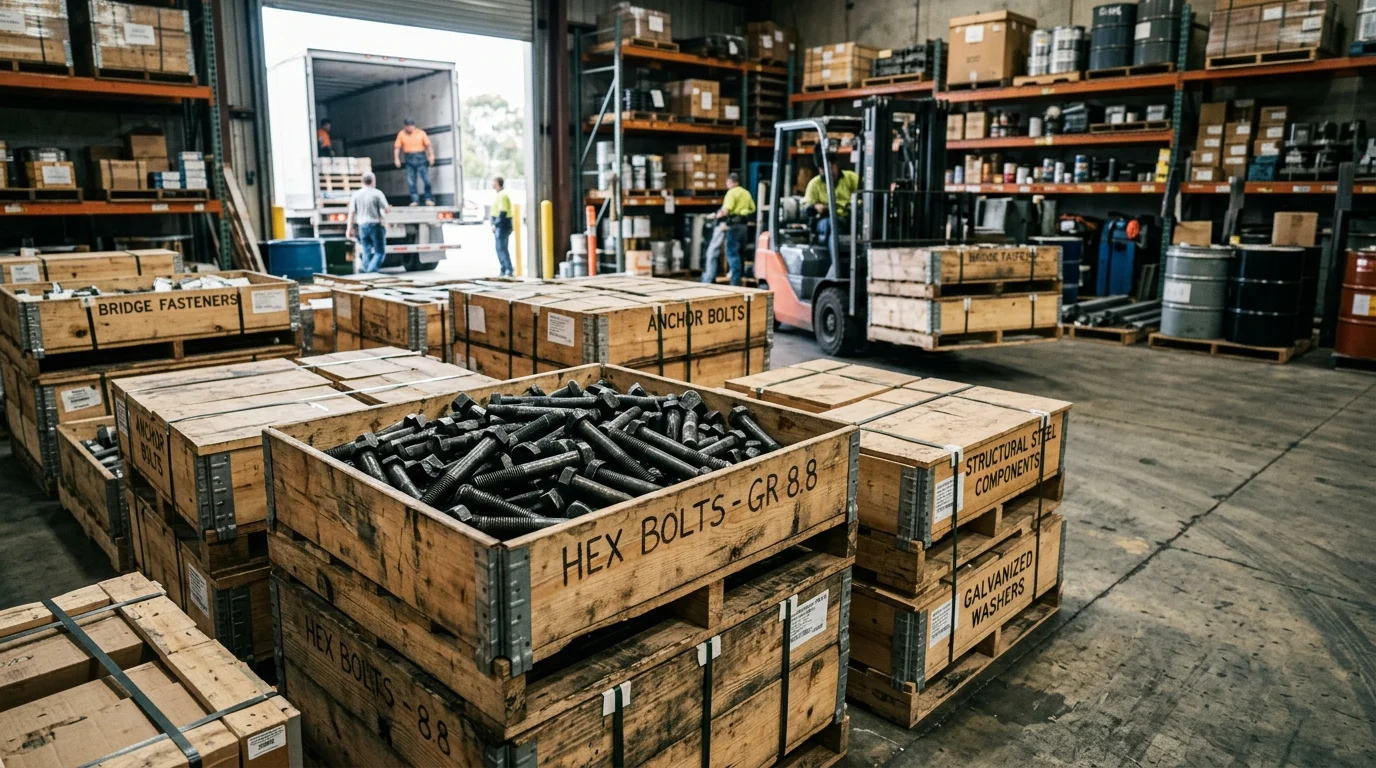
In bridge applications, the "grade" of a fastener is a comprehensive classification that defines its mechanical capabilities, chemical composition, and approved applications. It is a shorthand identifier that tells an engineer exactly how the steel was alloyed, how it was heat-treated, and how it will behave under immense physical stress. Understanding these grades is critical for ensuring that the specified hardware aligns perfectly with the structural demands of the joint.
Grade, Strength, and Material Properties
The grade of a fastener primarily dictates its tensile strength, yield strength, and core hardness. Tensile strength refers to the maximum amount of longitudinal stress the bolt can endure before fracturing, while yield strength indicates the point at which the steel permanently deforms. For structural bridge applications, low-carbon steel is entirely inadequate. Instead, engineers rely on medium-carbon or alloy steels that have undergone precise quenching and tempering processes.
For example, a standard baseline structural bolt must achieve a minimum tensile strength of 120 ksi (approximately 825 MPa) and a yield strength of at least 92 ksi. The heat treatment process rearranges the molecular structure of the steel, locking in the hardness required to maintain high clamping forces without sacrificing the ductility needed to absorb sudden impact loads. If a bolt is too brittle, it risks sudden catastrophic failure under shear stress; if it is too soft, it will stretch and loosen, compromising the joint's slip-critical nature.
Relevant Bridge Fastener Standards
The standardization of bridge fasteners is heavily regulated to ensure absolute uniformity across infrastructure projects. Historically, the industry relied on ASTM A325 and ASTM A490 as the definitive standards for structural bolts. However, to streamline specifications and eliminate redundancies, the American Society for Testing and Materials (ASTM) consolidated these legacy standards into a single, comprehensive specification: ASTM F3125. Today, engineers specify ASTM F3125 Grade A325 or Grade A490.
In addition to ASTM standards, bridge projects in the United States must adhere to the rigorous guidelines set forth by the American Association of State Highway and Transportation Officials (AASHTO). AASHTO specifications, such as M 164 (equivalent to A325) and M 253 (equivalent to A490), dictate not only the mechanical properties of the fasteners but also their approved usage in highway bridge design. Compliance with these interlocking standards guarantees that every batch of fasteners has been subjected to standardized proof load testing, wedge tensile testing, and magnetic particle inspection.
Structural Bolt Assemblies vs. Standard Hex Bolts
It is crucial to distinguish between heavy structural bolt assemblies and standard commercial hex bolts. While they may appear similar at a glance, structural bolts are engineered with specific geometric enhancements designed for heavy civil use. The most prominent difference is the heavy hex head. In structural fasteners, the distance across the flats of the bolt head and the corresponding heavy hex nut is typically 1/8 inch larger than that of a standard hex fastener.
This increased bearing surface is vital for bridge applications. When a structural bolt is tensioned to thousands of pounds of clamping force, the larger head and nut distribute that immense load over a wider area of the steel plate, preventing the hardware from crushing or yielding the base material. Furthermore, structural bolts are never used in isolation; they are deployed as carefully matched assemblies consisting of the bolt, a heavy hex nut (usually ASTM A563), and hardened steel washers (ASTM F436). Modern bridge erection also frequently utilizes Tension Control (TC) bolts (such as ASTM F1852 and F2280, the TC equivalents to A325 and A490). These feature a splined extension that twists off when the proper tension is reached, offering an efficient installation alternative to standard heavy hex structural bolts.
Common Hex Bolt Grades for Bridge Projects
Selecting the appropriate grade for a bridge project involves navigating a narrow field of highly specialized structural fasteners. The vast majority of modern steel bridge connections rely on two primary grades under the ASTM F3125 umbrella: Grade A325 and Grade A490. While both are high-strength fasteners, their distinct metallurgical profiles dictate where and how they can be deployed, particularly when environmental protection and corrosion resistance are factored into the design.
A325, A490, and Galvanized Bolt Comparison
Grade A325 and Grade A490 represent the two main tiers of structural fastening. Grade A325 bolts are manufactured from medium-carbon steel and provide a minimum tensile strength of 120 ksi for diameters up to 1 inch (and 105 ksi for larger diameters). Grade A490 bolts step up the performance significantly, utilizing alloy steel to achieve a minimum tensile strength of 150 ksi across all standard diameters.
The crucial differentiator between these two grades lies in their compatibility with protective coatings, specifically hot-dip galvanizing. Because A490 bolts possess a high core hardness (frequently exceeding 33 HRC), they are highly susceptible to hydrogen embrittlement—a phenomenon where hydrogen atoms introduced during the acid pickling and galvanizing process infiltrate the steel lattice, causing sudden, unpredictable micro-cracking.
| Specification | Minimum Tensile Strength | Core Hardness (HRC) | Hot-Dip Galvanizing Allowed? |
|---|---|---|---|
| ASTM F3125 Grade A325 | 120 ksi (up to 1") | 25 to 34 | Yes (ASTM F2329) |
| ASTM F3125 Grade A490 | 150 ksi (all sizes) | 33 to 38 | No (Strictly Prohibited) |
Strength, Corrosion, and Cost Trade-Offs
The choice between these grades involves a complex trade-off between absolute strength, corrosion resistance, and total project cost. Given the coating limitations of higher-strength alloys, engineers working in highly corrosive environments (such as coastal areas or regions with heavy winter salt usage) often default to galvanized Grade A325 assemblies. Hot-dip galvanizing typically adds a moderate premium to the upfront material cost of the fastener assembly but can significantly extend the connection's maintenance-free lifespan in C3 (medium corrosivity) environments.
When maximum strength is required but galvanizing is prohibited, engineers have alternative options. Both A325 and A490 grades are available in Type 3 variants, which are manufactured from weathering steel. Weathering steel develops a stable, protective rust patina that prevents further oxidation, making it ideal for unpainted bridge superstructures. Alternatively, A490 bolts can be coated using non-electrolytic zinc flake coatings (such as ASTM F1136), which provide excellent corrosion resistance without the risk of hydrogen embrittlement, though at a higher cost premium.
When High-Strength Hex Bolts Are Needed
Despite the coating limitations, the elevated strength of Grade A490 is often indispensable in major bridge projects. High-strength hex bolts are mandatory in connections subjected to extreme shear loads or where spatial constraints limit the size of the connection plates. By utilizing a higher-capacity fastener, engineers can significantly reduce the total number of bolts required for a specific joint.
For example, a massive girder splice that mathematically requires a specific number of A325 bolts to achieve the necessary clamping force might require proportionally fewer A490 bolts. This reduction in fastener count translates to smaller gusset plates, reduced steel tonnage, and a substantial decrease in the labor-intensive process of field drilling and aligning holes. In complex, heavily loaded nodes—such as the truss intersections of a long-span bridge—the use of A490 fasteners is often the only mathematically viable way to safely transfer the structural loads within the available physical space.
How to Choose the Best Hex Bolt Grade
Determining the optimal fastener grade is not a standalone decision; it is the culmination of a rigorous joint design process. Engineers must evaluate the specific mechanical behavior required from the connection, the environmental realities of the project site, and the installation methods available to the construction crews. The selection process ensures that the chosen hardware will perform predictably under both everyday dead loads and extreme, once-in-a-century live loads.
Project Conditions That Affect Grade Selection
The physical environment of the bridge dictates the baseline material and coating requirements. A bridge constructed over a marine inlet faces constant exposure to airborne chlorides, immediately eliminating uncoated or minimally protected steel from consideration. In such scenarios, heavily galvanized A325 bolts or specialized zinc-aluminum coated A490 assemblies are mandatory. Conversely, a pedestrian bridge in an arid, rural environment may perform perfectly well for decades using standard Type 1 or Type 3 structural bolts.
Temperature extremes also play a critical role. Bridges in northern climates routinely experience ambient temperature swings from -40°F in winter to over 100°F in direct summer sunlight. These fluctuations cause the steel superstructure to expand and contract, placing immense dynamic shear stress on the connections. The selected grade must maintain its ductility at sub-zero temperatures to prevent brittle fracture, a property that is verified through Charpy V-notch impact testing during the manufacturing process.
Slip-Critical, Bearing-Type, and Tension-Controlled Joints
The mechanical design of the joint directly influences grade selection and installation requirements. Bridge connections generally fall into two categories: bearing-type joints and slip-critical joints. In a bearing-type joint, the bolts are tightened to a snug-tight condition, and the structural load is transferred by the bolt shank bearing directly against the edge of the drilled hole. In these joints, the shear strength of the bolt (which is directly proportional to its tensile grade) is the limiting factor.
Slip-critical joints, however, are the standard for main load-bearing bridge connections. These joints rely entirely on the friction between the steel plates to transfer the load, meaning the plates must never slip. To achieve this, the bolts are heavily pretensioned, effectively acting as elastic clamping elements holding the steel together. The required pretension is typically 70% of the bolt's minimum ultimate tensile strength. Because of their differing tensile capacities, A490 bolts can generate significantly higher clamping forces than A325 bolts of the same diameter.
| Bolt Diameter (Inches) | Min. Pretension: A325 (kips) | Min. Pretension: A490 (kips) |
|---|---|---|
| 3/4" | 28 | 35 |
| 7/8" | 39 | 49 |
| 1" | 51 | 64 |
Step-by-Step Selection Process
The selection of a structural grade follows a highly structured engineering workflow. Step one involves calculating the total factored load (shear, tension, or combined) that the connection must endure. Step two requires the engineer to classify the joint as bearing or slip-critical, which determines whether the design relies on shear capacity or frictional clamping force.
Step three introduces spatial and geometric constraints, alongside practical installation factors such as grip length and hole preparation. If the connection node is physically small, the engineer must specify a higher-grade fastener to minimize the bolt count. Step four filters the selection through environmental constraints, applying necessary restrictions on hot-dip galvanizing for high-hardness alloys. Finally, step five involves specifying the complete assembly and the tensioning method—such as turn-of-nut, direct tension indicators (DTIs), or the use of twist-off TC bolts—ensuring that the selected hardware guarantees predictable torque and tension during field installation.
Sourcing, Compliance, and Final Selection
Procuring structural fasteners for bridge construction is one of the most heavily audited processes in civil engineering. Sourcing the correct grade is only half the battle; proving the metallurgical pedigree and mechanical reliability of those fasteners through exhaustive documentation is equally critical. A single batch of non-compliant hardware can halt a multi-million-dollar infrastructure project, forcing costly delays and mandatory replacements before the first steel beam can be erected.
Required Certifications and Documentation
Every keg of structural fasteners delivered to a bridge site must be accompanied by comprehensive Mill Test Reports (MTRs). These documents trace the steel from the original melt at the foundry through every stage of forging, heat treatment, and threading. The MTR verifies the exact chemical composition of the heat lot, ensuring the carbon, manganese, and alloying elements fall within the strict tolerances defined by ASTM F3125.
Furthermore, the documentation must include the results of mandatory mechanical testing. This includes proof load testing, wedge tensile testing to verify ultimate strength, and hardness testing. For galvanized assemblies, Rotational Capacity (ROCAP) testing is an absolute requirement. ROCAP testing evaluates the efficiency of the assembly's lubrication and ensures the galvanized threads will not gall or strip during high-tension installation. Passing this test requires the assembly to be tightened to a minimum of 1.15 times the required installation tension without suffering any thread failure or shank yielding.
Domestic Sourcing and Project Compliance
In the United States, bridge procurement is heavily governed by federal and state sourcing laws. Projects receiving funding from the Federal Highway Administration (FHWA) are generally bound by Buy America provisions. This legislation typically mandates that the iron and steel used in the project—including bolts, nuts, and washers—must be melted and manufactured entirely within the United States, subject to specific federal funding thresholds, recent regulatory updates, and the availability of waivers.
Navigating domestic sourcing requires rigorous supply chain management. Contractors cannot simply purchase structural hex bolts from international commercial distributors if the project carries federal funding and lacks an applicable waiver. The manufacturer must provide signed certifications of domestic origin. Failure to provide this documentation results in the immediate rejection of the hardware, regardless of whether the mechanical properties meet the ASTM standards. Consequently, bridge contractors establish long-term relationships with certified domestic foundries and fastener manufacturers to ensure an uninterrupted, compliant supply chain.
Final Guidance for Choosing A325, A490, or Alternatives
The final selection of a hex bolt grade for a bridge project requires the rigorous optimization of structural necessity and environmental reality. For the vast majority of standard highway overpasses, girder splices, and cross-bracing connections, ASTM F3125 Grade A325 remains the undisputed industry workhorse. Its baseline strength is sufficient for most loads, and its compatibility with highly durable hot-dip galvanizing makes it a cost-effective, long-term solution for exposed infrastructure.
However, as bridge designs become more ambitious, spanning greater distances and carrying heavier rail and freight loads, the elevated capacity of Grade A490 becomes indispensable. When engineers are forced to transfer massive forces through compact connection nodes, higher-strength fasteners allow for sleeker, lighter, and more efficient joint designs. By strictly adhering to ASTM standards, rigorously managing environmental coatings, and maintaining flawless material traceability, engineers ensure that the millions of fasteners holding a bridge together will perform flawlessly for generations to come.
Key Takeaways
- Specify ASTM F3125 structural heavy hex bolts, such as A325 or A490, instead of general-purpose SAE hex bolts for bridge connections.
- Use A325 bolts for many bridge applications because they balance strength, ductility, availability, and coating flexibility.
- Choose A490 bolts only when higher strength is required and the project can control installation, coating limits, and hydrogen embrittlement risk.
- Match every structural bolt with compatible nuts and washers, such as ASTM A563 nuts and ASTM F436 washers, to maintain assembly performance.
- Account for fatigue, corrosion, and pretension because bridge connections may experience millions of load cycles over a 50- to 100-year service life.
- Select coatings based on exposure conditions, especially where de-icing salts, marine spray, or weathering steel assemblies affect long-term durability.
Frequently Asked Questions
What hex bolt grade is most commonly used for bridges?
ASTM F3125 Grade A325 heavy hex structural bolts are commonly specified because they provide high strength, ductility, and proven performance for many bridge connections.
When should A490 bolts be used instead of A325 bolts?
A490 bolts may be selected when the design requires higher tensile strength, but they need stricter installation control and coating review due to hydrogen embrittlement and corrosion considerations.
Are standard SAE Grade 5 or Grade 8 hex bolts suitable for bridges?
Usually no. Bridge projects typically require ASTM structural bolt assemblies with verified strength, traceability, compatible nuts and washers, and installation procedures that general-purpose SAE bolts do not cover.
Why is bolt pretension important in bridge connections?
Proper pretension maintains clamping force, reduces slip, and helps the joint resist fatigue from repeated truck, train, wind, and thermal loads over decades of service.
Which bolt coating is best for bridge environments?
The best coating depends on exposure. Hot-dip galvanizing is common for A325 bolts, while weathering steel or approved specialized coatings may be used for corrosive or coastal environments.